

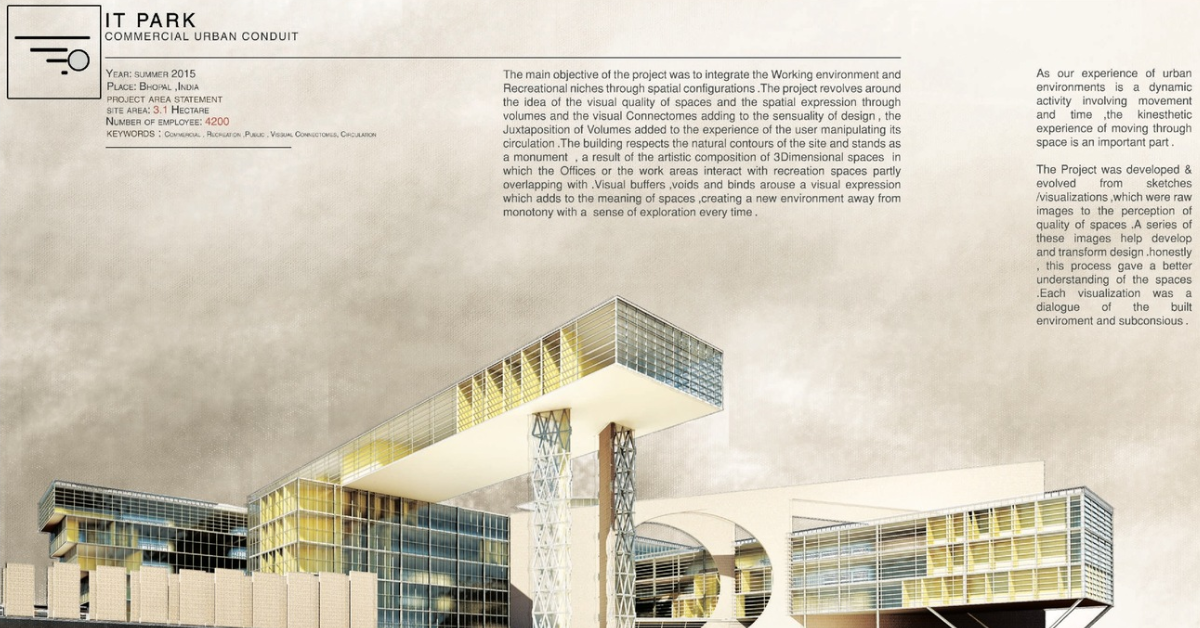
Hiring for an architecture or interior design practice involves much more than reviewing educational qualifications and previous job titles. In creative professions, a portfolio often becomes the strongest indicator of a candidate’s actual ability, design sensibility and readiness to contribute to professional projects.
For architecture and interior design firms, portfolio screening helps translate an application into a clearer picture of the person behind it. Drawings, layouts, concepts, material explorations and completed projects can reveal how a candidate approaches design, communicates ideas and responds to practical challenges.
With firms increasingly receiving large volumes of applications, however, portfolio evaluation also needs structure. A clear portfolio screening checklist for architecture and interior design firms can help hiring teams identify stronger candidates without allowing visual presentation alone to influence the final shortlist.
A Strong Portfolio Begins With Clear Communication
Before assessing design talent, firms should consider how clearly the portfolio communicates information.
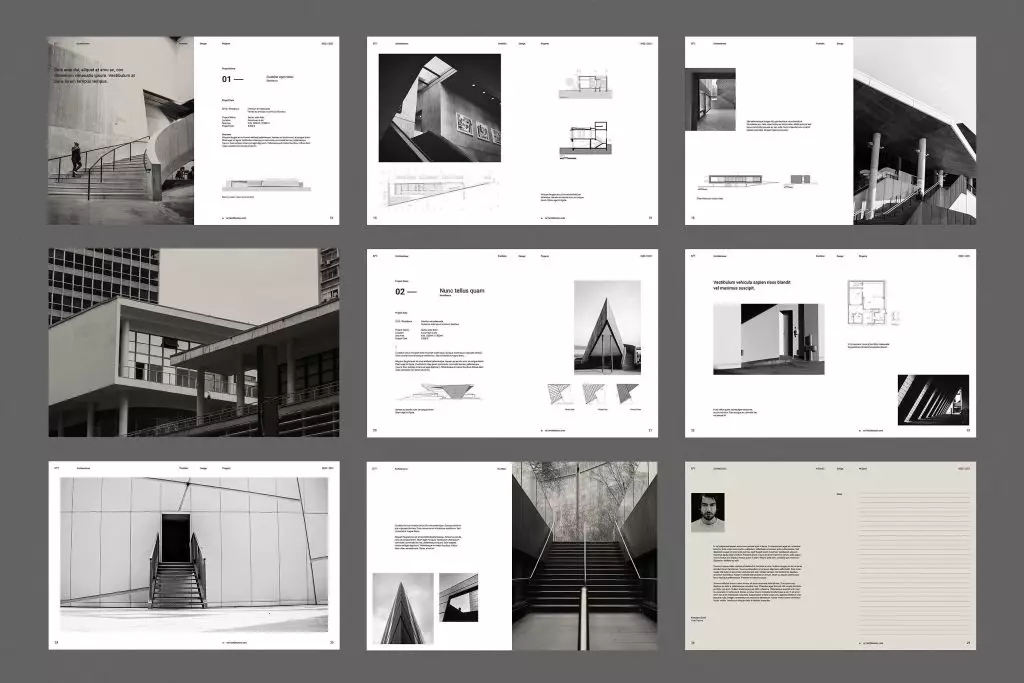
Well-structured architecture and interior design portfolios usually establish a logical hierarchy from the beginning. Project titles, typologies, locations, timelines and professional or academic context should be easy to understand without forcing the reviewer to decode each page.
Visual clarity also matters. Drawings should be legible, captions should support rather than clutter the presentation, and the sequence of projects should feel deliberate. A portfolio that presents complex information in a simple and organised manner often reflects a designer who understands the importance of communication within professional practice.
For recruiters, this becomes an important early indicator because architects and interior designers regularly communicate with clients, consultants, contractors and internal project teams.
Design Thinking Matters More Than Perfect Renders
One of the most common mistakes in architecture portfolio screening is placing too much emphasis on photorealistic renders.
High-quality visualisation certainly strengthens a portfolio, particularly for candidates applying for design or visualisation-oriented roles. However, beautiful imagery alone provides limited understanding of the decisions behind a project.
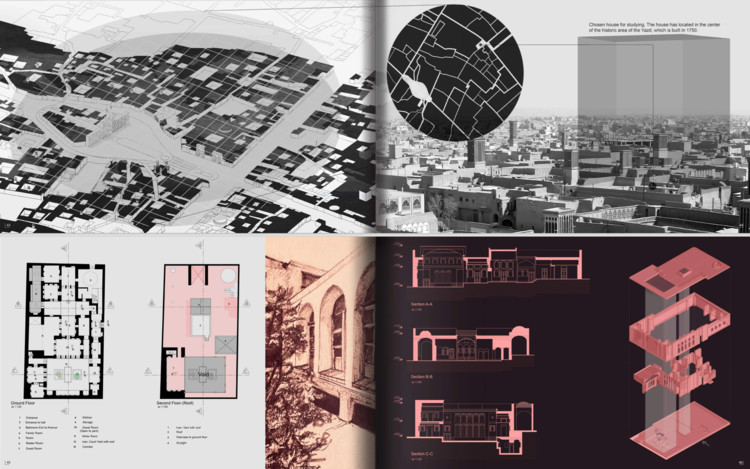
A stronger portfolio demonstrates progression. Site studies, contextual responses, spatial diagrams, conceptual sketches, zoning explorations and design development communicate how an idea evolved before reaching its final form.
This becomes especially important for architecture and interior design firms that value conceptual thinking. Candidates who can demonstrate the reasoning behind their work are often easier to evaluate than those who present only polished final images.
A visually impressive portfolio may capture attention, but a portfolio that communicates design process, spatial thinking and architectural reasoning usually provides greater value during recruitment.
Also read – Why Architects Still Admire Saynatsalo Town Hall: A Masterclass in Human-Centered Design
Spatial Problem-Solving Should Be Visible Across Projects
Architecture and interior design are fundamentally problem-solving disciplines.
Every project responds to a different set of constraints, whether related to site, climate, function, budget, circulation, privacy, user experience or construction. The strongest portfolios show how candidates worked within those parameters instead of presenting design as an isolated visual exercise.
During portfolio evaluation for architects and interior designers, firms should therefore look for evidence of practical decision-making. Residential projects may reveal an understanding of privacy and circulation, while hospitality projects can demonstrate attention to user experience, material transitions and spatial sequencing.
Institutional, commercial and workplace projects may provide insight into scale, efficiency, accessibility and planning.
When these considerations are clearly visible, the portfolio becomes more than a collection of attractive projects. It begins to demonstrate the candidate’s ability to convert complex requirements into workable design solutions.
Technical Knowledge Separates Ideas From Executable Design
Creativity remains essential in architecture and interior design, but professional practice also demands technical understanding.
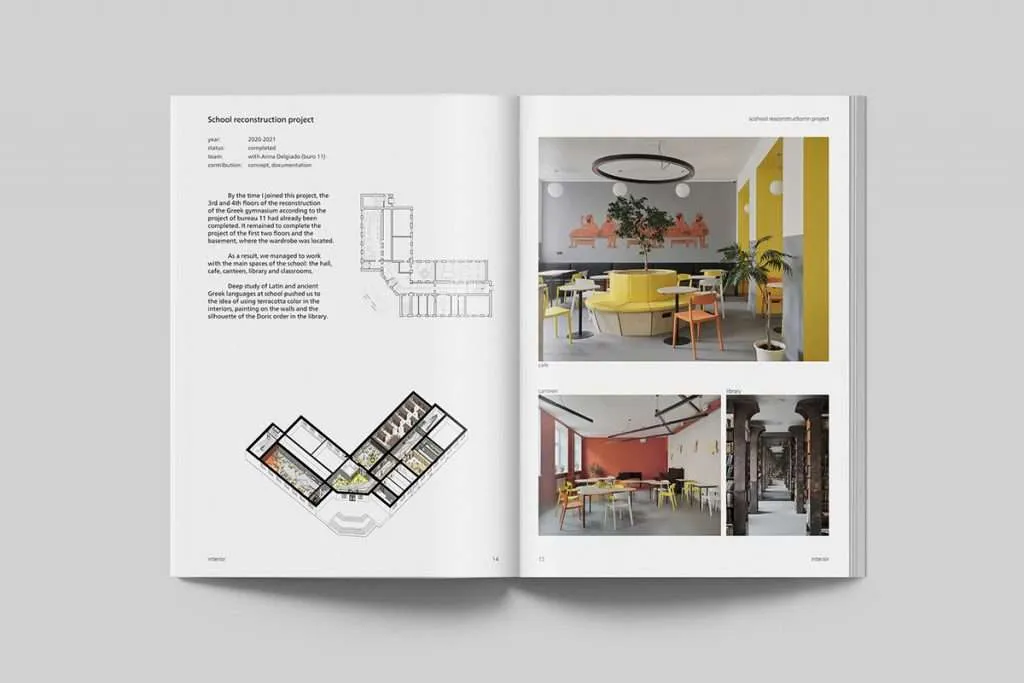
Plans, sections, elevations, working drawings, detailing and construction documentation provide valuable insight into whether candidates understand how designs are developed beyond the conceptual stage.
For interior designers, the same principle applies to furniture layouts, reflected ceiling plans, lighting layouts, joinery details, material specifications and execution drawings. These components allow firms to assess the candidate’s familiarity with the technical side of project delivery.
The level of technical detail expected should naturally depend on seniority. A junior architect may demonstrate foundational understanding, while a project architect or senior interior designer would generally be expected to show stronger exposure to detailing, documentation and execution.
For firms recruiting professionals who will contribute directly to live projects, technical design skills and construction knowledge can become just as important as creative ability.
Professional Projects Need Clear Role Attribution
Portfolio screening becomes more complex when candidates present projects completed as part of larger architecture or interior design practices.
Large projects often involve multiple architects, consultants and design teams. As a result, the project itself does not necessarily represent the exact capabilities of the applicant.
Strong professional portfolios usually clarify individual contribution. A candidate may have been responsible for concept development, façade design, documentation, interior detailing, visualisation, consultant coordination or site execution.
Clear attribution allows architecture firms to understand where the candidate actually participated in the project and how that experience may translate into a new role.
Without this context, highly impressive professional work can become difficult to assess accurately. Transparency around responsibilities therefore plays an important role in effective architecture and interior design recruitment.
Relevance Should Carry More Weight Than Portfolio Size
A longer portfolio is not necessarily a stronger portfolio.
For most architecture and interior design firms, relevance is considerably more valuable than the number of projects included. A concise portfolio that demonstrates skills aligned with the vacancy can often make a stronger impression than an extensive document containing unrelated work.
A hospitality-focused interior design studio, for example, may naturally give greater importance to portfolios demonstrating spatial experience, materiality, lighting and customer movement. A large architectural consultancy may place greater emphasis on documentation, coordination, BIM capabilities and experience with complex building programmes.
Similarly, a boutique residential practice may look closely at detailing, sensitivity to context and material exploration.
A good portfolio screening process therefore begins with the needs of the role. Once those priorities are established, hiring teams can evaluate candidates according to the capabilities that will actually matter within the practice.
Consistency Reveals More Than One Exceptional Project
Most candidates naturally place their strongest work at the beginning of a portfolio. For hiring teams, however, evaluating consistency across several projects provides a better understanding of overall ability.
Strong architecture portfolios tend to maintain a certain level of clarity, design thinking and attention to detail throughout. The graphic language may change, project types may vary and the design approach may evolve, but the overall quality of thinking usually remains visible.
Large differences between individual projects do not automatically indicate weakness. They may result from different project timelines, team structures or academic stages. Nevertheless, reviewing the portfolio as a complete body of work helps firms understand whether the strengths visible in one project are repeated elsewhere.
Consistency is particularly useful when screening large numbers of candidates because it helps distinguish sustained capability from one highly polished submission.
Software Skills Should Be Demonstrated Through Work
Architecture and interior design resumes often contain extensive software lists. AutoCAD, Revit, Rhino, SketchUp, Enscape, Lumion, Adobe Photoshop, Illustrator and several other programmes appear frequently across applications.
While these skills are useful, software proficiency is more meaningful when demonstrated through actual project work.
A well-developed BIM model, precise technical drawing, complex geometric study or sophisticated visualisation communicates considerably more than simply listing a programme under technical skills.
This also helps employers understand how candidates use digital tools within the design process. Software is most valuable when it improves drawing accuracy, communication, coordination or design exploration rather than becoming an end in itself.
For architecture and interior design firms, reviewing the output created with these tools can therefore provide a more realistic understanding of software proficiency and digital design capability.
Presentation Quality Reflects Attention to Detail
Portfolio design should never overshadow architectural work, but poor presentation can weaken even a strong project.
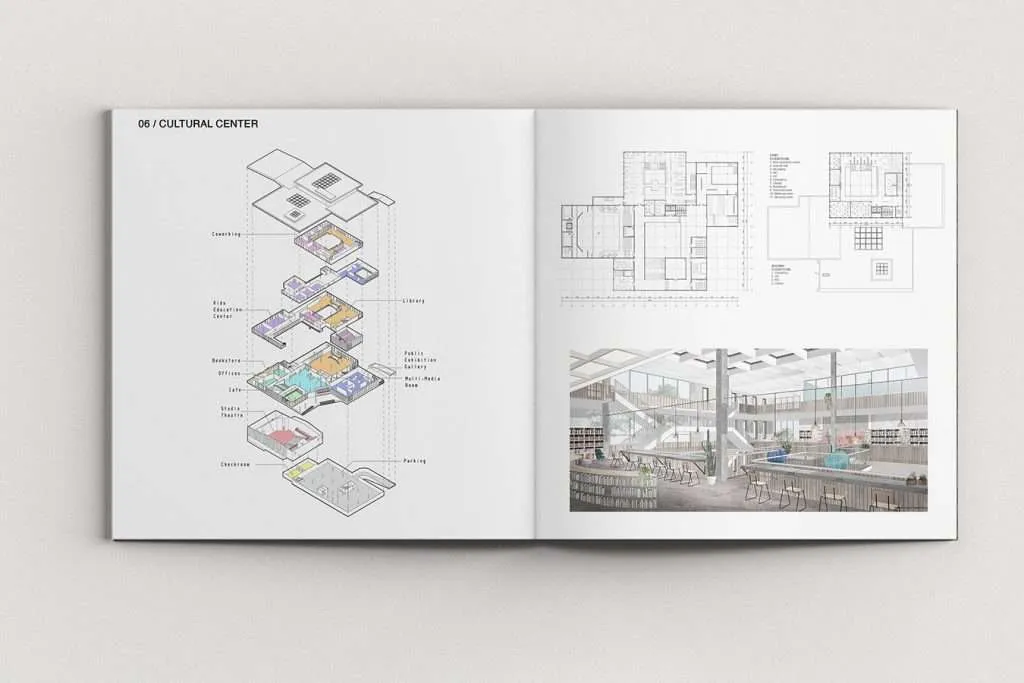
Consistent typography, balanced layouts, appropriately scaled drawings and high-resolution imagery help create an efficient viewing experience. More importantly, these details often demonstrate that the candidate has reviewed and edited their own work carefully.
Architecture and interior design practices rely heavily on presentations, drawing sets and client-facing communication. Attention to visual detail therefore has direct professional relevance.
This does not mean every portfolio needs elaborate graphic design. Some of the strongest portfolios are visually restrained. What matters is control, consistency and readability.
Good presentation supports the projects rather than competing with them.
Portfolio Style Should Not Become a Hiring Bias
Every architecture practice develops certain visual and design preferences over time. During hiring, however, these preferences can unintentionally influence portfolio screening.
Minimal graphic layouts, experimental illustrations or highly rendered presentations may appeal differently to individual reviewers. None of these styles necessarily indicate stronger architectural ability.
Effective portfolio screening should focus on the quality of design thinking rather than whether a candidate’s presentation style matches the personal aesthetic of the hiring manager.
This becomes particularly important for firms seeking diverse creative perspectives. Hiring candidates with different methods of thinking and representation can bring greater variety into design discussions and project development.
A balanced screening process considers creative ability, technical knowledge, communication and project relevance before personal stylistic preference.
Junior and Senior Portfolios Need Different Benchmarks
The same portfolio criteria should not be applied equally across every level of experience.
Junior architects and interior designers may have limited exposure to completed professional projects. Their portfolios are therefore likely to include academic work, competitions, conceptual explorations and internships.
At this stage, firms can place greater emphasis on curiosity, spatial understanding, design development, drawing ability and willingness to experiment. Academic projects can be particularly valuable because they often reveal how independently candidates develop ideas.
Senior candidates require a different assessment. Portfolios for project architects, senior designers and team leaders should demonstrate responsibility, technical maturity, coordination and understanding of project delivery.
Experience with consultants, clients, site execution and larger project teams may become increasingly relevant as seniority rises.
Using role-specific benchmarks makes portfolio screening for architecture jobs considerably more accurate.
Red Flags Should Encourage Closer Evaluation
Certain portfolio characteristics may indicate areas worth examining more carefully during shortlisting.
A portfolio consisting almost entirely of renders may provide little evidence of technical capability. Professional work without clear attribution can make individual contribution difficult to determine. Extremely dense layouts can affect communication, while projects without plans or sections may provide limited understanding of spatial development.
These factors should not always result in immediate rejection. Candidates, particularly younger professionals, may simply lack experience in preparing portfolios for recruitment.
Instead, they can serve as useful indicators for further discussion during an interview or portfolio review.
The purpose of portfolio screening is not only to eliminate candidates. It is also to identify where stronger evidence may be required before making a hiring decision.
Creating a More Consistent Portfolio Screening Framework
Architecture and interior design firms can improve recruitment considerably by standardising the initial portfolio review.
When different directors or recruiters screen applications independently, personal preferences can easily create inconsistent shortlists. Establishing a common evaluation framework brings greater clarity to the process.
Design thinking, technical ability, relevant experience, individual project contribution, communication, software proficiency and presentation quality can form the core areas of evaluation.
The relative importance of each area can then change according to the role being filled.
Such a framework does not remove professional judgement. Instead, it gives hiring teams a stronger foundation for making comparisons between candidates and reduces the risk of being influenced solely by portfolio aesthetics.
Better Portfolio Screening Leads to Better Design Teams
An architecture portfolio is ultimately more than a collection of drawings and renders. It reflects how a designer observes, interprets, develops and communicates ideas.
For architecture and interior design firms, effective portfolio screening should therefore examine both the visible outcome and the thinking that supports it. Strong design ability, technical awareness, clarity of communication, relevant project exposure and honest representation of responsibilities together provide a much clearer indication of professional potential.
A structured portfolio screening checklist for architecture and interior design firms can make recruitment faster while also improving the quality of shortlisting.
The most successful hiring decisions are rarely based on the most visually dramatic portfolio alone. They come from recognising the candidate whose work, thinking and abilities are most aligned with the needs and future direction of the practice.
When portfolio screening becomes more thoughtful and consistent, firms are better positioned to identify designers who can contribute meaningfully from the first project onwards.