

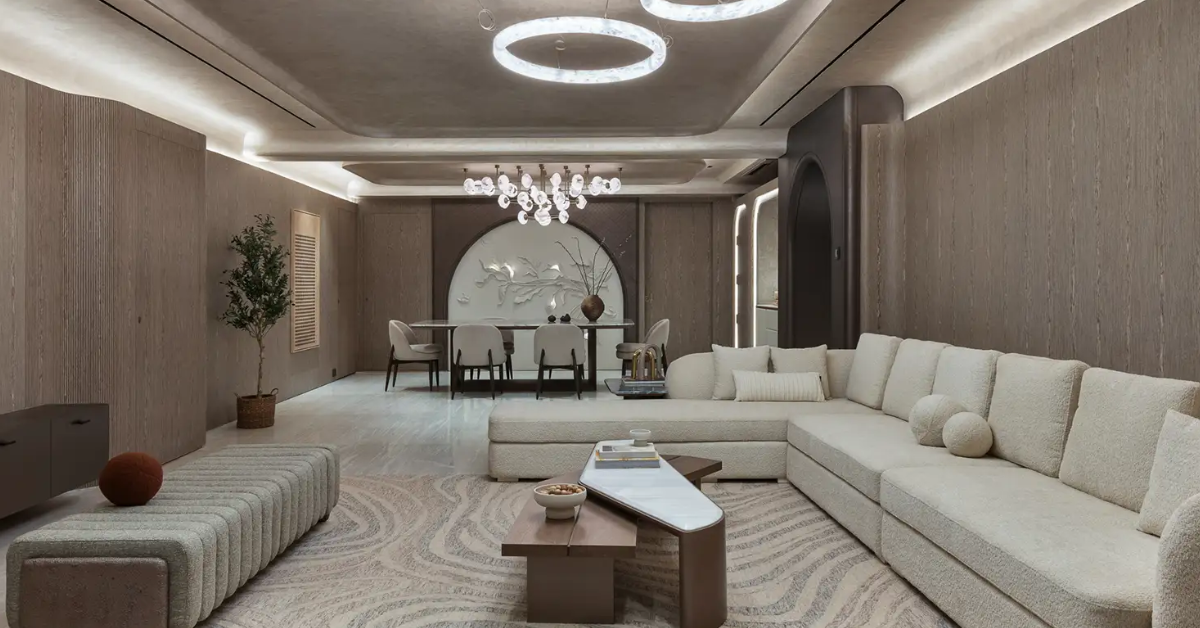
Interior design has developed far beyond the traditional idea of decorating rooms, selecting colours or arranging furniture. Contemporary interior designers work with space planning, materials, lighting, accessibility, building regulations, furniture, technology, project budgets and construction teams. As buildings become smarter and expectations from homes, workplaces, hotels, hospitals and retail spaces continue to change, the profession is also becoming more complex.
This raises an important career question for students planning their future: is interior design a good career in 2030?
Current evidence suggests that interior design can remain a good career in 2030, particularly for professionals who combine creativity with technical knowledge, digital skills and a strong understanding of how people use physical spaces. However, interior design is unlikely to remain unchanged. Artificial intelligence, Building Information Modelling, advanced visualisation tools, changing workplaces, urban growth and new expectations around accessibility and building performance are already influencing the profession.
The future of interior design is therefore not simply about whether jobs will continue to exist. It is about how the role of an interior designer will evolve and which skills will become more valuable by 2030.
Is Interior Design a Good Career for the Future?
Interior design has a positive but relatively steady employment outlook rather than an unusually high-growth forecast.
The latest U.S. Bureau of Labor Statistics data, released in August 2026, projects employment of interior designers to increase by 3% between 2025 and 2035. This is approximately as fast as the average for all occupations in the United States. The BLS also expects around 7,700 openings for interior designers each year on average over the decade, including openings created when existing professionals leave the occupation or retire.
These figures are important because they provide a reliable occupational benchmark, but they should not be interpreted as a worldwide forecast. The BLS data applies specifically to the United States. Comparable official long-term employment projections for interior designers in India are not currently available.
The available evidence nevertheless shows that interior design is not becoming an obsolete profession. Renovations, building regulations, accessibility requirements and the continuing need to plan functional interiors are among the factors identified by the BLS as supporting future demand.
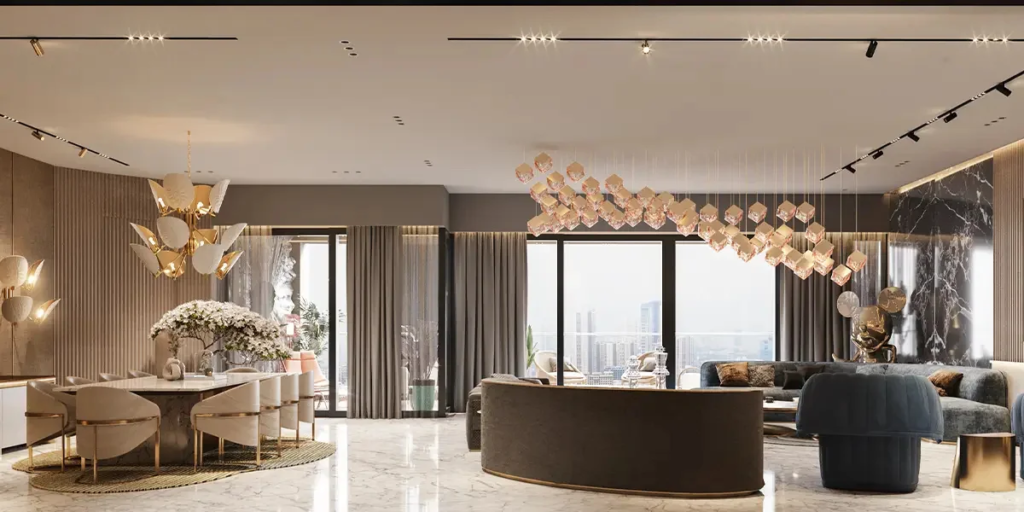
Interior Design in 2030 Will Be More Than Decoration
One of the strongest reasons interior design is likely to remain relevant is the changing definition of the profession itself.
Professional interior design involves much more than creating an attractive visual environment. According to the Bureau of Labor Statistics, interior designers consider space requirements, circulation, materials, lighting, furnishings, construction costs and project schedules. They may also prepare electrical and partition layouts, coordinate with contractors and work with architects and engineers. Designers are expected to understand building codes, inspection requirements and accessibility standards.
This distinction will become increasingly important by 2030.
Digital platforms and artificial intelligence can already recommend colour combinations, produce concept images and generate visual references. These capabilities are likely to become considerably more advanced. However, a visually attractive image is not the same as a buildable interior.
A successful interior must fit actual dimensions, budgets, services, materials, safety requirements, circulation needs and construction conditions. The designer must also resolve conflicts that emerge during execution and coordinate with several professionals and suppliers.
The future of interior design is therefore likely to shift further towards problem-solving, technical coordination and user experience rather than decoration alone.
Also read – Why Gen Z Interior Design Is the Exciting New Trend Taking Over Homes
Will AI Replace Interior Designers by 2030?
Artificial intelligence is one of the largest factors influencing discussions about interior design careers in 2030.
AI-powered design tools can generate mood boards, visual concepts, furniture arrangements and rendered environments much faster than traditional workflows. Future systems will probably become better at producing initial design alternatives, analysing information and assisting with routine production work.
This does not necessarily mean that AI will replace interior designers.
The World Economic Forum’s Future of Jobs Report 2025 found that employers expect 39% of workers’ existing skill sets to be transformed or become outdated between 2025 and 2030. AI and big data, technological literacy and cybersecurity are among the fastest-growing areas of skill demand. At the same time, creative thinking, resilience, flexibility, curiosity and lifelong learning are also expected to increase in importance.
The significance for an interior design career is clear. Digital competence and creativity are increasingly complementary rather than opposing skills.
An interior designer who relies entirely on manual workflows may face greater pressure as automation improves. A designer who understands both design fundamentals and emerging AI tools may be able to produce alternatives faster, explore concepts more efficiently and devote more time to decision-making and execution.
AI in interior design is therefore more likely to alter workflows than eliminate every part of the profession.
Why Technical Interior Design Skills Will Matter More
The interior designer of 2030 will need strong technical skills alongside creativity.
Computer-aided design is already a standard element of professional practice. The BLS states that most interior designers use CAD software for their drawings and that designers often use Building Information Modelling software to create three-dimensional representations containing building elements.
By 2030, familiarity with digital modelling, BIM, rendering, virtual presentations and AI-assisted workflows is likely to become even more important.
Technical expertise extends beyond software. Interior designers require an understanding of dimensions, circulation, lighting, furniture, materials, construction details and the relationship between interior elements and building systems.
The profession also requires strong communication. Interior designers regularly work with clients, architects, engineers, contractors, vendors and specialist consultants. A design has to move successfully from an initial concept to a physical space.
Technology can help produce drawings and images, but professional judgement remains essential when selecting an appropriate solution from many possible alternatives.
The Interior Design Career in India Has a Large Built-Environment Base
The outlook for an interior design career in India should be discussed carefully because there is no authoritative government forecast stating exactly how many interior designer jobs India will have by 2030.
There are, however, significant indicators in the wider built environment.
The Government of India’s Economic Survey 2025–26 reports that the “real estate and ownership of dwellings” sector has contributed around 7% of India’s annual Gross Value Added on average over the past decade. It also notes a sustained post-pandemic upcycle in housing and reports that outstanding individual housing loans increased from approximately ₹10 lakh crore at the end of March 2015 to more than ₹37 lakh crore by the end of March 2025.
These figures do not measure the interior design industry directly and should not be presented as proof that interior design employment will rise by a particular percentage. They do, however, demonstrate the scale and economic importance of India’s housing and real-estate ecosystem.
Urban growth also remains significant. The United Nations’ World Urbanization Prospects 2025 identifies India as one of seven countries expected to account collectively for more than half of the increase in the world’s city population through 2050. Under the UN’s international city classification used in the report, India had approximately 589 million people living in cities in 2025.
A growing and continually changing built environment can support demand for residential interiors, commercial spaces, hospitality projects, healthcare environments, workplaces and renovations. The exact number of future interior design jobs, however, will depend on investment, consumer demand, economic growth, technology and the organisation of the design and construction industries.
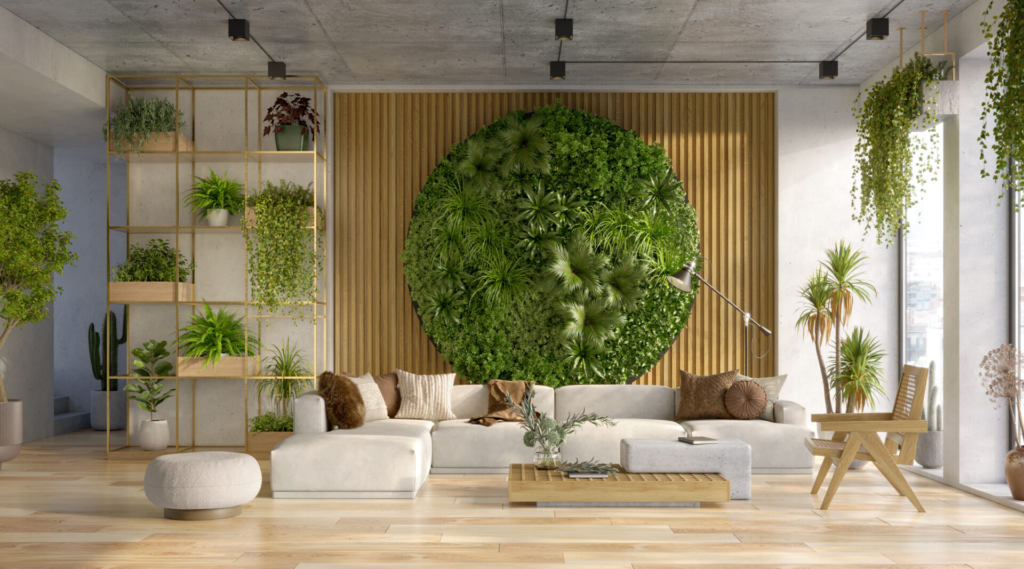
Residential Interior Design Will Remain an Important Career Area
Residential interior design is likely to remain a major part of the profession through 2030 because housing constantly requires new construction, renovation and adaptation.
The nature of residential interiors is also changing. Urban homes often need to accommodate several activities within limited floor areas. Living spaces may need to support work, entertainment, dining, storage and family activities without increasing the physical size of the home.
This creates greater emphasis on intelligent space planning rather than decoration alone.
Residential interior designers increasingly need to understand modular systems, built-in storage, lighting, materials, ergonomics and the relationship between furniture and circulation. Technology integration is also becoming an important aspect of home interiors.
Renovation is another area with long-term relevance. The Bureau of Labor Statistics specifically identifies renovation projects as a source of continuing demand for interior design services in the United States.
Although market conditions differ by country, the principle is broadly significant. Buildings do not need to be newly constructed to generate design work. Existing homes and buildings require redesign as lifestyles, technologies and user requirements change.
Commercial Interior Design Is Becoming More Experience-Focused
Commercial interior design presents a different range of opportunities.
Office design, hospitality interiors, retail environments, restaurants, healthcare spaces and institutional interiors all require specialised approaches. Each typology has different operational, technical and behavioural requirements.
BLS occupational information already recognises several forms of specialisation within interior design, including corporate design, healthcare design, kitchen and bath design and universal design. Healthcare designers, for example, may apply evidence-based design principles, while corporate designers focus on efficient and functional workplace environments.
This trend towards specialisation could become increasingly important by 2030.
A hotel interior must support brand identity, guest experience and operations. A hospital requires specialised attention to safety, circulation, hygiene and patient experience. A workplace must balance concentration, collaboration and organisational requirements.
As interior projects become more complex, specialised knowledge can create a stronger professional advantage than general visual styling alone.
Accessibility and Inclusive Design Will Strengthen the Professional Role
Accessibility is another factor that supports the long-term relevance of trained interior designers.
The BLS explicitly identifies the need to meet accessibility standards as one factor that may support employment for interior designers. It also recognises universal design as a professional specialisation focused on making environments more accessible to a wider range of users.
This area extends well beyond compliance.
Interior spaces serve children, older adults, people with temporary injuries and people with different physical or sensory requirements. Accessible circulation, appropriate dimensions, clear wayfinding, lighting and carefully considered furniture can make spaces easier for more people to use.
As populations age in many countries and awareness of inclusive design increases, knowledge of accessibility is likely to become a valuable interior design skill.
The professional value of an interior designer therefore increasingly lies in understanding how environments perform for different users, not simply how those environments appear in photographs.
Is Interior Design a High-Paying Career?
Interior design has the potential to become a well-paying career, but income varies considerably by country, experience, specialisation, employer and business model.
The latest U.S. Bureau of Labor Statistics data places the median annual wage for interior designers at $67,190 in May 2025. Designers working in architectural, engineering and related services had a median annual wage of $78,340.
These amounts should not be converted into rupees and presented as an Indian interior designer salary. They reflect the U.S. labour market, cost structure and wage environment.
There is no single reliable salary figure that accurately represents every interior designer in India. Compensation varies significantly between cities, firms, sectors and levels of experience. Independent designers and studio owners also have business income structures that are different from salaried employment.
Earning potential generally develops with experience, portfolio quality, technical capability, project scale, management responsibility and specialisation.
A career decision should therefore not be based on a single headline salary estimate.
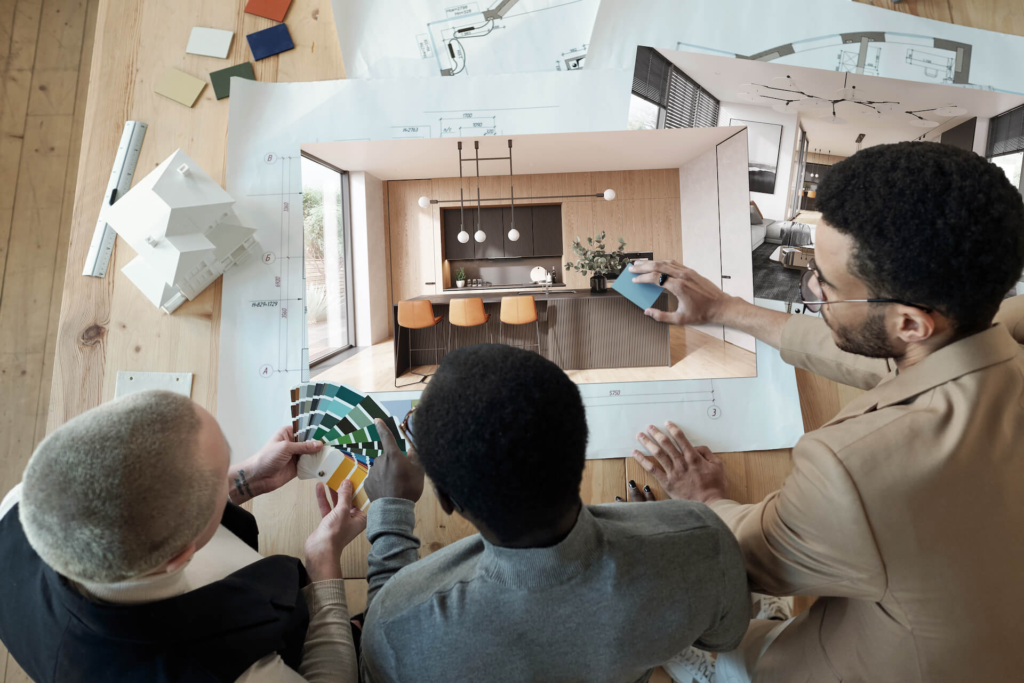
Freelancing and Independent Practice Add Another Career Path
Interior design is also notable for the proportion of professionals who work independently.
According to the BLS, self-employed workers represented approximately 26% of U.S. interior designer employment in 2025. Specialised design services accounted for another 30%.
Again, these percentages are U.S.-specific, but they demonstrate an important characteristic of the profession: interior design can support both salaried employment and independent practice.
An interior designer may work in a design studio, architecture practice, real-estate company, furniture business or multidisciplinary consultancy before eventually establishing an independent studio.
Entrepreneurship can create greater creative control and potentially higher income, but it also introduces responsibilities such as business development, contracts, staffing, procurement, budgeting and client acquisition.
Interior design as a career therefore combines creative practice with considerable potential for entrepreneurship.
What Skills Will Interior Designers Need by 2030?
The strongest interior design careers in 2030 are likely to combine creative, technical and interpersonal capabilities.
Knowledge of space planning, materials, furniture, lighting, ergonomics and construction will remain fundamental. CAD and BIM skills will continue to be relevant, while AI-assisted design, advanced visualisation and other digital tools are likely to become more common.
Creative thinking will remain important because every design project involves multiple possible solutions. Analytical thinking will also matter as designers evaluate dimensions, costs, performance requirements and competing project constraints.
Communication will be equally important. Interior design is collaborative by nature and requires designers to explain ideas, respond to criticism, coordinate with consultants and manage expectations throughout a project.
The World Economic Forum’s finding that 39% of existing worker skill sets may change or become outdated by 2030 also underlines the importance of continuous learning.
The most valuable skill may therefore be the ability to continue adapting as design technology and professional practice evolve.
Challenges of Choosing Interior Design as a Career
A positive future outlook does not make interior design an easy profession.
Interior projects operate within deadlines, budgets and physical constraints. Material delays, construction problems, changing client requirements and coordination errors can affect even carefully planned projects.
Competition can also be intense. Easy access to visual inspiration and AI-generated concepts means attractive imagery alone is becoming less effective as a professional differentiator.
This places greater importance on technical competence, execution quality, originality and reliability.
Early-career designers may also need time to develop strong portfolios, site knowledge and professional networks before reaching higher levels of responsibility or income.
Interior design is therefore better suited to people interested in solving spatial problems and managing complex projects than to those attracted exclusively by the visual or glamorous image of the profession.
Is Studying Interior Design Worth It for 2030?
Interior design education can remain valuable for students entering the profession before 2030, particularly when the programme develops both creative and technical skills.
A strong interior design course should provide exposure to spatial design, drawing, construction, materials, furniture, lighting, design history, digital software and professional practice. Site experience and internships are equally important because interior design is ultimately implemented in physical buildings.
Portfolio development also plays a major role in employment.
A strong portfolio demonstrates more than finished renderings. It should communicate the design process, spatial reasoning, technical understanding and ability to solve a project brief.
By 2030, students with a combination of design knowledge, digital capability, AI literacy and practical experience are likely to be better positioned than those relying on software or aesthetics alone.

Is Interior Design a Good Career in 2030?
Interior design can be a good career in 2030, but its future lies in a broader and more technically demanding version of the profession.
Current official U.S. employment projections show continued, moderate growth rather than decline, with interior designer employment expected to increase by 3% between 2025 and 2035 and approximately 7,700 openings projected annually.
India does not currently have an equivalent official 2030 employment forecast specifically for interior designers. However, the scale of the country’s housing and real-estate sector, continuing urban transformation and substantial built-environment activity provide a meaningful professional context for interior design services.
Artificial intelligence will change parts of the design process, particularly visualisation, ideation and routine production. At the same time, current workforce research indicates that technological literacy and creative thinking are both becoming more important.
The future of interior design will therefore belong increasingly to professionals who can combine creativity with technical expertise, digital tools, human-centred thinking and real-world execution.
Interior design in 2030 is unlikely to be limited to choosing how a space should look. It will increasingly involve determining how that space should work, how people should experience it and how design ideas can be successfully translated into built reality.
For students interested in space, materials, technology, construction and creative problem-solving, interior design remains a viable and potentially rewarding career for 2030 and beyond.