


Starting an architecture career can create an unusual challenge. Most young professionals have spent years learning design, construction, planning, materials and representation, yet their first search for employment may immediately confront them with job descriptions asking for professional experience.
For Architects Looking For Jobs with limited experience, this apparent gap can make the employment market seem difficult to enter. However, professional experience is only one part of an architecture candidate’s profile. Design ability, technical understanding, communication, software proficiency, documentation skills, curiosity and the ability to learn can carry considerable value at the beginning of a career.
The architecture profession also continues to require new talent. In the United States, the Bureau of Labour Statistics projects employment of architects, excluding landscape and naval architects, to increase by 4% between 2025 and 2035, with about 6,900 openings projected annually on average over that period. These figures are specific to the U.S. market, but they illustrate that architecture remains an active professional field rather than a career defined only by senior positions.
The challenge for less-experienced architects is therefore not simply finding vacancies. It is presenting academic knowledge, internships, technical capabilities and design potential in a way that makes a practice understand the value the candidate can bring from the first day.
Why Architects Looking For Jobs Should Not Treat Limited Experience as a Disadvantage
Architecture is a profession in which expertise develops gradually. A recent graduate cannot reasonably be expected to possess the same understanding of construction administration, client management, contracts or project delivery as an architect who has worked for ten years.
Professional frameworks themselves recognise this progression. In the United States, for example, NCARB’s Architectural Experience Program distributes professional development across areas including practice management, project management, programming and analysis, planning and design, documentation, and construction and evaluation. The programme reflects the reality that architectural competency develops across different stages of professional practice.
Young professionals should therefore avoid presenting themselves as incomplete versions of experienced architects. A stronger approach is to demonstrate what has already been learned, where genuine strengths exist and how quickly those strengths can translate into professional work.
A carefully presented candidate with one internship and an excellent portfolio may create a stronger impression than somebody with more months of experience but weak communication and poorly documented work.

Make the Architecture Portfolio Your Strongest Evidence
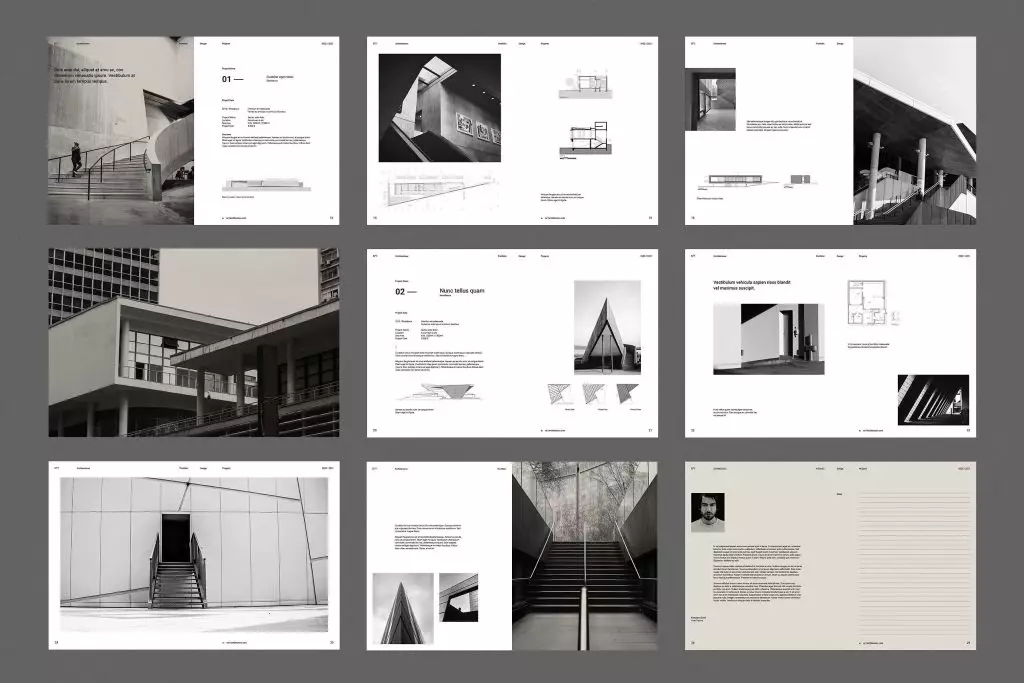
For Architects Looking For Jobs early in their careers, the architecture portfolio often becomes one of the most important pieces of evidence available to an employer.
A portfolio should not simply function as a collection of attractive renders. It should reveal how a candidate thinks about architecture.
Academic projects can be highly valuable when they demonstrate site analysis, concept development, planning, circulation, climatic response, material decisions, structural thinking, detailing and visual communication. Employers should be able to understand how an idea moved from an initial problem to a developed architectural response.
Final-year thesis projects can therefore become significant portfolio material when edited carefully. Instead of filling several pages with every drawing produced during college, candidates should select work that demonstrates different abilities.
One project may show strong conceptual thinking, another may demonstrate technical detailing, while another could highlight housing, public architecture, adaptive reuse, landscape integration or interior planning.
The objective is not to prove that the applicant has already mastered professional practice. It is to demonstrate architectural thinking with clarity.
Also read – Will Architects Be in Demand in 10 Years? The Powerful Truth About Architecture Careers
Show the Process Behind the Finished Render
Contemporary architecture portfolios can become heavily focused on visualisation. While rendering is useful, firms usually require much more than the ability to create polished images.
Architecture eventually has to move from concept to drawing, coordination and construction.
Including plans, sections, elevations, diagrams, development sketches, details and material studies can therefore make an architecture portfolio considerably more informative. These drawings help demonstrate whether a candidate understands space beyond its appearance.
A strong section, for example, can communicate structure, levels, scale, daylight and relationships between spaces far more effectively than a dramatic exterior visualisation.
For Architects Looking For Jobs with less experience, process can become proof of capability. Employers may not expect a graduate to have managed a construction site independently, but they can reasonably look for evidence that the candidate understands how architectural ideas develop.
Build Technical Skills That Architecture Firms Can Immediately Use
Design ability remains central to architecture, but employability also depends on whether a candidate can contribute to everyday project work.
Digital drafting, building information modelling, three-dimensional modelling, graphic communication and presentation skills can make graduates useful within project teams relatively quickly.
Depending on the type of firm and position, commonly encountered tools may include AutoCAD, Revit, SketchUp, Rhino, Adobe Photoshop, Illustrator and InDesign, along with rendering and visualisation platforms. Candidates should not attempt to list every architectural software package simply to make a CV appear impressive. Software should be included when there is enough proficiency to work with it productively.
BIM deserves particular attention because digital building workflows have become an important part of contemporary practice. The U.S. Bureau of Labor Statistics specifically notes that BIM software, improved measuring technologies and the integration of artificial intelligence are increasing efficiency within architectural design work.
This does not mean every young architect needs to become a software specialist. It does mean that Architects Looking For Jobs can improve their prospects by combining design thinking with practical digital skills that match the workflows of the firms they approach.
Do Not Send the Same CV to Every Architecture Firm
A common mistake in an architecture job search is applying to dozens of firms with exactly the same CV, portfolio and introductory message.
Architecture practices are rarely identical. One may specialise in large institutional projects, another in residential architecture, another in hospitality interiors and another in conservation or urban design.
Applications should reflect these differences.
A candidate approaching a residential design studio could foreground housing projects, material sensitivity and interior-spatial thinking. Someone approaching a large multidisciplinary practice may want to highlight BIM capabilities, documentation skills, teamwork and experience dealing with complex building programmes.
The basic qualifications remain unchanged, but the emphasis changes.
This is particularly important for architecture jobs for freshers because a customised application signals that the candidate has researched the practice rather than sending applications indiscriminately.
Research the Architecture Firm Before Applying
The quality of an application often begins before the email is written.
Architects Looking For Jobs should understand what a firm actually does, the scale of projects it handles and the kind of design language or professional approach visible in its portfolio.
Researching a practice also prevents poorly targeted applications. A candidate whose portfolio is centred around parametric experimentation might discover firms where those abilities are particularly relevant. Another candidate with strong working drawings and detailing may find opportunities in practices handling execution-heavy projects.
Firm websites, professional architecture platforms, published interviews and the practice’s official social media pages can help reveal recent projects and areas of work.
Research also improves interviews. Instead of giving generic answers about wanting to “gain experience”, candidates can discuss specific projects, project types or aspects of practice that genuinely relate to their interests.
That level of preparation can help a less-experienced applicant appear considerably more focused.
Turn Internships, Freelance Work and Academic Projects Into Valid Experience
Limited full-time employment does not mean the candidate has no relevant experience.
Architectural internships can demonstrate exposure to office systems, drafting, documentation, visualisation, model making, presentations, research or site coordination. Even short internships can become valuable when responsibilities are described clearly.
The same applies to freelance work, competitions, workshops, live academic projects and collaborative design exercises.
For example, writing “completed a three-month internship” communicates little. Explaining that the internship involved developing presentation drawings, updating plans, preparing 3D models and assisting with site documentation communicates practical involvement.
This distinction matters because employers need evidence of what was actually done.
Professional experience programmes also acknowledge that architectural learning can come from several settings. NCARB, for example, permits certain qualifying experience outside a conventional architecture office through its Setting O framework, including specified design competitions, construction-related employment and community-based design work. The exact licensure rules are jurisdiction-specific, but the broader principle is useful: professional development can occur through several kinds of architectural activity.
Apply Beyond the Job Title “Junior Architect”
A narrow search can unnecessarily reduce the number of opportunities available.
Architects Looking For Jobs may find relevant positions advertised under titles such as architectural assistant, architectural designer, graduate architect, junior designer, BIM modeller, architectural visualiser, design assistant or CAD technician, depending on local professional regulations and the terminology used by the employer.
Candidates should examine responsibilities rather than searching exclusively for one title.
Architecture graduates also develop skills that can lead toward related fields including construction management, project management, exhibition design, urban planning, visualisation and other areas of the built environment. U.S. data on people with architecture degrees, for example, shows graduates working not only as architects but also across management, business, design, construction management and planning occupations.
This does not mean abandoning architecture. It demonstrates that architectural education develops transferable skills that can open several routes into professional practice.
Understand When the Professional Title “Architect” Can Be Used
Architectural employment and professional registration are related but distinct issues, and young candidates should understand the rules that apply in the country where they intend to work.
In India, the Architects Act, 1972 defines an “architect” as a person whose name is entered in the Register of Architects. The Council of Architecture states that registration entitles a person to practise the profession of architecture and to use the title and style of “Architect”, subject to the applicable registration requirements.
This distinction is particularly relevant when writing CVs, LinkedIn profiles and application emails.
In other countries, licensure structures differ. Candidates seeking architecture jobs overseas should therefore check the relevant registration or licensing authority rather than assuming that academic qualification alone allows the unrestricted use of a professional title.
Accurate professional terminology makes an application appear more credible while avoiding unnecessary regulatory problems.

Make the CV About Contribution, Not Just Education
An architecture CV for a less-experienced candidate does not need to appear empty.
Education may occupy an important section, but it should not overwhelm the document.
Relevant software skills, internships, design competitions, workshops, academic distinctions, research, freelance projects and technical abilities can all help explain what a candidate can contribute.
Descriptions should remain concise and specific. Terms such as “hard-working”, “creative” and “passionate” are difficult for employers to evaluate without evidence.
A stronger CV demonstrates those qualities indirectly.
A candidate who coordinated a group housing project, prepared construction details during an internship or developed a complete BIM model has provided evidence of responsibility and skill without relying on generic adjectives.
Good typography and hierarchy also matter. An architecture CV is itself a small piece of information design. It should be visually organised, professional and easy to scan.
Networking Still Matters in an Architecture Job Search
Not every architecture opportunity begins with a public job advertisement.
Professional relationships can help candidates learn about firms, internships, collaborations and openings that might otherwise remain invisible.
Architecture schools, alumni communities, professional events, exhibitions, lectures, conferences and design competitions can all create connections between emerging professionals and practising architects.
Networking should not be understood simply as asking established architects for jobs. A more useful approach is to build genuine professional relationships around shared interests.
A short message showing familiarity with a practice and asking whether the firm accepts junior applications is more effective than a generic request forwarded to dozens of architects.
Faculty members and former internship supervisors can also remain valuable professional contacts. They may know practices searching for junior team members and can sometimes provide references based on direct knowledge of a candidate’s abilities.
Prepare for Architecture Interviews Through the Portfolio
Architecture interviews often move naturally toward the portfolio because projects provide a practical way for employers to understand a candidate’s thinking.
Each portfolio project should therefore have a clear explanation.
Candidates should be able to describe the design problem, site conditions, concept, planning decisions, materials and major challenges without simply reading text from the page.
It is equally important to distinguish individual contribution from group work.
If four students developed a project together, an applicant should clearly explain which drawings, models, research or design decisions were personally handled. Professional credibility is strengthened by accuracy rather than exaggerated claims.
Less-experienced candidates are not expected to know everything. When technical questions extend beyond existing knowledge, a clear acknowledgement followed by a reasoned response is generally more credible than attempting to disguise uncertainty.
Treat the First Architecture Job as a Learning Environment
Salary, location and studio reputation can influence the choice of a first job, but learning opportunities are equally important.
Early-career architectural work can expose a candidate to concept design, documentation, consultant coordination, client meetings, statutory processes, specifications and construction sites. Exposure to different project stages helps transform architectural education into professional understanding.
NCARB’s experience framework similarly spans several areas of architectural practice rather than treating professional development as design work alone. Its current requirements cover practice management, project management, programming and analysis, project planning and design, project development and documentation, and construction and evaluation.
For Architects Looking For Jobs, this is an important perspective. The strongest first opportunity may not always be the firm with the most recognisable name. A smaller practice where a junior team member sees drawings develop into built work may sometimes provide broader exposure than a narrowly defined role within a much larger organisation.
The appropriate choice depends on individual career goals, but the learning environment deserves serious consideration.

Do Not Let Rejection Define an Architecture Career
Architecture recruitment can be affected by project schedules, office workload, economic conditions and the immediate requirements of a firm.
A rejection therefore does not automatically mean that a portfolio is weak.
A studio may need a BIM specialist when the applicant is strongest in conceptual design. Another practice may require somebody with three years of construction documentation experience. A firm may simply have completed recruitment before receiving a later application.
The productive response is to improve the parts of the job search that can be controlled.
Portfolios can be refined. Technical skills can be developed. CVs can become clearer. Applications can become more targeted. Interview communication can improve.
The early stages of an architecture career are rarely defined by a single application. They are built through repeated cycles of learning, applying, receiving feedback and developing stronger professional skills.
What Firms Actually Need From Less-Experienced Architects
Architecture practices hiring junior candidates are not necessarily looking for finished professionals. They are often looking for people who can become reliable contributors.
Accuracy matters because drawings affect other members of a project team. Curiosity matters because junior architects encounter unfamiliar building systems and project conditions. Communication matters because architecture is collaborative. Time management matters because design work operates around submissions, meetings and deadlines.
Perhaps most importantly, the ability to respond constructively to feedback matters.
Architecture education encourages individual design exploration, but professional practice is collaborative. Projects evolve through clients, consultants, regulations, budgets, contractors and internal review.
Candidates who demonstrate adaptability alongside design ability therefore present themselves as professionals capable of developing within a team.
Architects Looking For Jobs Should Build Evidence Before Chasing Experience
The apparent contradiction of needing experience in order to gain experience can be reduced by focusing on evidence.
A carefully resolved academic project is evidence of design thinking. A detailed drawing is evidence of technical understanding. A BIM model is evidence of digital capability. An internship is evidence of professional exposure. A competition entry is evidence of initiative. A clear portfolio is evidence of communication.
None of these substitutes completely for years in practice, but young candidates are not competing by pretending those years already exist.
They are competing by showing that the foundation for professional growth is already present.
For Architects Looking For Jobs with less experience, that distinction is essential.
Final Thoughts
Beginning a career in architecture requires patience because architectural knowledge develops across many project types and stages. Limited experience should therefore be treated as a starting position rather than a permanent professional limitation.
Architects Looking For Jobs can strengthen their chances by building a concise architecture portfolio, improving technical software skills, researching firms carefully, presenting internships effectively, exploring appropriate entry-level architecture jobs and developing professional relationships within the industry.
The objective of the first application is not to prove complete mastery of architecture. It is to demonstrate enough design ability, technical understanding, professionalism and capacity to learn that an employer can recognise future potential.
Experience will accumulate through practice. The immediate task is to make existing ability visible.