

Completing a Bachelor of Architecture is a major milestone, but graduating from architecture school is not quite the end of the professional registration journey. For graduates planning to formally use the title of Architect in India, Council of Architecture Registration After B.Arch becomes one of the most important administrative tasks after completing the degree.
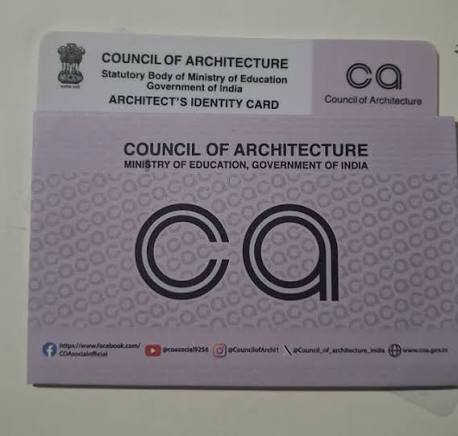
The Council of Architecture, commonly known as COA, maintains the Register of Architects in India under the Architects Act, 1972. A person whose name is entered in this register is recognised as a registered architect under the Act. The Council also regulates architectural education and professional standards in the country.
The registration process itself is not particularly complicated. What often creates delays is incorrect information, incomplete documents, missing marksheets, mistakes in names or enrolment numbers, and the assumption that completing the online form is the final stage.
If you have recently completed B.Arch and are preparing your application, understanding the entire COA registration process after B.Arch can save considerable time and unnecessary follow-ups.
Why Council of Architecture Registration After B.Arch Matters
A B.Arch degree establishes your academic qualification in architecture, while registration with the Council of Architecture enters your name into the statutory Register of Architects.
Under the Architects Act, the term “Architect” refers to a person whose name is currently entered in the register. Section 37 of the Act protects the use of the title and style of Architect for registered architects, subject to the exceptions stated in the law.
There is an important legal distinction here. In its 2020 judgment in Council of Architecture v. Mukesh Goyal, the Supreme Court held that Section 37 restricts the use of the title “Architect” by unregistered individuals, rather than creating a blanket prohibition on every activity associated with architectural design, supervision or construction.
For a B.Arch graduate building a professional identity, however, registration remains significant because it provides entry into the official register and enables the lawful use of the professional title.
Who Can Apply for COA Registration After B.Arch?
For most fresh graduates, eligibility begins with holding a recognised architectural qualification. The Architects Act defines a recognised qualification as one included in the Schedule to the Act or otherwise recognised under its provisions.
This makes it important to verify that your architecture qualification and institution fall within the recognised framework applicable to your batch.
Graduates should not assume that simply having studied a course containing the word “architecture” automatically makes them eligible for registration. The qualification recognised under the Architects Act is what matters for the purpose of entering the Register of Architects.
For students completing the standard recognised B.Arch route in India, the next stage is generally to gather the necessary academic records and begin the Council of Architecture application process.
Also read – Will Architects Be in Demand in 10 Years? The Powerful Truth About Architecture Careers
Where Does the COA Registration Process Begin?
The Council of Architecture Registration After B.Arch process begins on the official Council of Architecture portal.
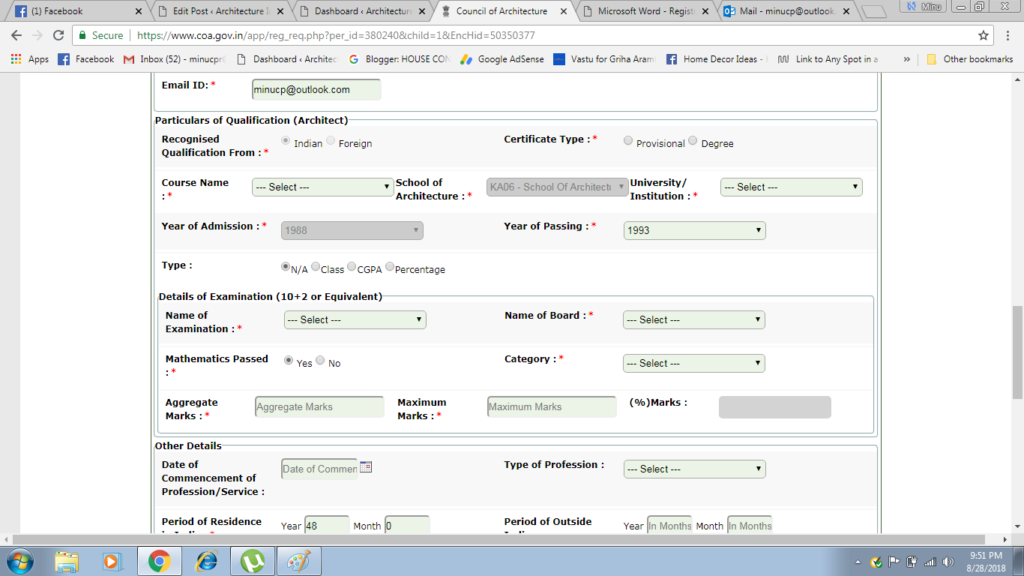
A new applicant must first sign up as an applicant and provide details such as their email address, year of admission, institution information, communication address, date of birth, mobile number and other required information. The email address provided during registration becomes important for receiving login information and subsequent communication.
Council of Architecture’s current instructions state that applicants create an account, log in and complete the registration application online. Applicants are also required to upload a recent colour photograph measuring 3.5 cm by 3.5 cm with a maximum file size of 10 KB, along with a signature image of up to 4 KB.
Because portal requirements can change over time, applicants should always check the latest instructions displayed on the official COA website before uploading their files.
Your COA Enrolment Number Is More Important Than You May Think
One small detail can create a surprisingly large problem during Council of Architecture registration after B.Arch: the student enrolment number.
According to the Council’s current registration instructions, the Council of Architecture enrolment number is mandatory, where applicable, for students admitted from the academic year 2008–09 onwards. The number should be entered exactly in the format recorded by the Council.
Students can normally obtain their enrolment information through their institution or the relevant facility available through the Council of Architecture website.
Do not guess the number from an old college document or enter a similar-looking university enrolment number. Your university registration number and Council of Architecture student enrolment number may not necessarily be the same thing.
Checking this detail before beginning the application can prevent an avoidable mismatch later.
Documents Required for Council of Architecture Registration After B.Arch
Document preparation is where applicants should spend the most time before submitting the form.
The Council currently asks for proof of date of birth and the 10+2 or equivalent examination marksheet. Students who entered architecture through a 10+3 diploma route are instructed to provide the relevant semester marksheets along with the diploma certificate.
Applicants must also submit their degree certificate or an acceptable provisional or passing certificate issued by the competent university authority. If the final degree has not yet been issued, the Council states that a provisional certificate or passing certificate may be submitted in applicable cases.
Academic documentation does not stop with the final semester result. Council of Architecture asks for marksheets covering all semesters or years of the recognised qualification, including records relating to failed subjects, ATKT or supplementary examinations where applicable. A consolidated marksheet containing the detailed marks for all semesters or years may also be accepted in place of separate semester marksheets. Practical training documentation should also be included where applicable.
A caste or category certificate should be included where relevant.
The important takeaway is simple: your Council of Architecture registration documents after B.Arch should reflect your complete academic record, not merely the degree certificate and final-year marksheet.
Can You Apply Before Receiving Your Final B.Arch Degree?
This is one of the most common questions among fresh architecture graduates.
Yes, Council of Architecture’s current instructions provide for situations where the final degree or diploma has not yet been issued by the university. In such cases, an applicant may submit the provisional certificate or passing certificate issued by the competent university authority.
There is, however, an important condition. Council of Architecture states that a provisional certificate will not be accepted where the final degree or diploma has already been awarded by the university to the applicant’s batch.
Therefore, applicants should avoid relying on an old provisional certificate indefinitely. If your university has already issued the final B.Arch degree for your batch, use the final document wherever required.
Online Application Does Not Mean the Entire Process Is Online
This is probably the most important practical point in the entire Council of Architecture Registration After B.Arch process.
After filling out the online application, the current Council of Architecture instructions require applicants to take a printout of the completed form. The application must be signed at the designated place and submitted along with the required supporting documents to the Registrar, Council of Architecture, at its office in the India Habitat Centre, Lodhi Road, New Delhi.
This means filling the form online and paying the fee should not automatically be treated as completion of the registration process.
Applicants need to ensure that the physical submission requirements stated by Council of Architecture have also been fulfilled. Missing this stage can leave an application incomplete even though the applicant has successfully created an account and made an online payment.
How Much Is the Council of Architecture Registration Fee?
As of September 2026, the Council of Architecture lists the registration fee as ₹600. The fee is non-refundable according to Council of Architecture’s registration instructions.
The Council’s current information also lists an annual renewal fee of ₹600 and a one-time renewal fee option of ₹6,000. These are separate from the initial registration fee.
Applicants should check the official Council of Architecture website immediately before payment rather than relying on screenshots, old college notices or older blogs, since statutory fees and payment procedures can be revised.
Another mistake worth avoiding is making the payment repeatedly when a transaction appears delayed. Council of Architecture specifically advises applicants not to pay again if the amount has already been deducted but the portal still displays a payment prompt; applicants should instead contact the Council for an update.
Do Not Forget the Final “Submit to COA” Action
Paying the registration fee is not necessarily the last online action.
Council of Architecture’s current instructions specifically remind applicants to select the “Submit to Council of Architecture” option after making an online payment. According to the Council, this ensures that the application becomes available for further processing.
This is exactly the kind of small procedural detail that can cause unnecessary confusion.
A graduate may upload every document correctly, make the payment and assume that the application has automatically moved forward. If the required final submission action is missed, however, the form may not reach the next processing stage.
Before closing your application, check its status rather than assuming payment equals submission.
Name Mismatches Can Delay an Otherwise Perfect Application
Architecture graduates often have variations in their names across school marksheets, university records, identification documents and degree certificates.
Even minor differences deserve attention during the Council of Architecture Registration After B.Arch because the Council is creating a formal professional record that will be linked to your registration certificate.
Council of Architecture provides specific documentation requirements for name changes. In cases involving a surname change following marriage, its instructions provide for supporting documentation such as a marriage certificate, Gazette notification or the prescribed affidavit route. For certain other changes to the first name or name, a Gazette notification may be required.
The safest approach is to compare your name across every academic certificate before beginning the application. Resolve substantial discrepancies through the appropriate documentation rather than hoping they will be ignored during verification.
Every Semester Marksheet Really Does Matter
One of the easiest mistakes for fresh graduates to make is sending only clean or successful academic records.
Council of Architecture specifically asks for the marksheets of all semesters or years, including records involving failed subjects, ATKT or supplementary examinations.
There is no advantage in omitting an older marksheet simply because the subject was later cleared. Your complete academic history allows the Council to verify the recognised qualification properly.
Students who have a university-issued consolidated marksheet showing detailed results across all semesters may use that where it meets Council of Architecture’s stated requirement.
Before dispatching your application, arrange the documents systematically and compare them against the Council’s current checklist.

Self-Attestation and Document Order Should Not Be Ignored
Council of Architecture’s registration instructions state that the documents may be self-attested or duly attested by a Gazetted Officer, Notary Public or Oath Commissioner. The Council also instructs applicants to arrange the documents with the application in the same order as its checklist.
These requirements might appear minor compared with your B.Arch certificate, but registration applications involve document verification. A neatly organised application is easier to assess and reduces the possibility of an important document being overlooked.
Applicants should also avoid sending unnecessary original academic certificates unless specifically requested. Council of Architecture notes that it is not responsible for the loss or damage of original certificates or documents sent through post.
How Long Does COA Registration After B.Arch Take?
Fresh graduates often expect the registration number to be generated immediately after completing the online form.
Council of Architecture’s current instructions state that processing an application takes at least one month from the date the Council receives the application and all supporting documents in hard copy.
The phrase “at least” is important. It should not be interpreted as a guaranteed 30-day turnaround.
Actual processing can depend on whether the application is complete and whether additional verification or clarification is required. Applicants planning employment documentation, professional profiles or other formal requirements should therefore avoid leaving registration until the last possible moment.
Starting soon after receiving the required university documents is considerably easier than trying to complete registration against an urgent deadline.
Common COA Registration Mistakes That Are Completely Avoidable
Most registration problems do not come from the complexity of the procedure. They come from small errors.
Entering the wrong enrolment number, uploading photographs in the wrong format, leaving out old semester marksheets, submitting only the final-year result, forgetting practical training documentation where applicable or failing to sign the printed application can all make an otherwise straightforward application incomplete.
Another frequent problem is assuming that online payment completes the process. The current procedure also requires the appropriate final online submission action and dispatch of the signed printed application with supporting documents.
Applicants should also avoid working from an old YouTube tutorial or blog without comparing it with the latest Council of Architecture instructions. Registration rules, portal interfaces and fees can change. The official Council website should remain the final reference.
Registration Is Followed by Renewal
Receiving your Council of Architecture registration number should not be treated as the end of your responsibility.
Registration must remain current. The Council presently lists annual renewal at ₹600, with the annual renewal fee due from 1 January and a deadline of 31 March of the relevant year. Council of Architecture also lists a one-time renewal payment option of ₹6,000, subject to its applicable conditions.
One important condition is relevant to architects initially registered using provisional degree documentation. Council of Architecture states that the one-time renewal option requires an attested final B.Arch degree or G.D. Arch. certificate and is not accepted solely on the basis of a provisional certificate.
This is why graduates should continue updating their records even after their initial registration has been approved.
Is COA Registration the Same as Your B.Arch Degree?
No. Your B.Arch degree and your Council of Architecture registration serve different purposes.
The degree is an academic qualification awarded by your university. Council of Architecture registration records your name in the statutory Register of Architects in accordance with the Architects Act.
This distinction also explains why graduating students should not begin using the title “Architect” simply because their final semester has ended. Registration status matters when using the protected professional title. Under the Act, “Architect” is defined in relation to entry in the register.
For graduates transitioning from architecture school into professional life, completing registration is therefore more than an administrative formality. It marks the movement from holding an architectural qualification to becoming a registered architect.

What Should You Check Before Sending the Application?
Before submitting Council of Architecture Registration After B.Arch, read your application once as though you were the person verifying it.
Check whether your name is consistent across documents, whether your date of birth matches your supporting proof, whether the correct COA enrolment number has been entered and whether every semester’s academic record has been included.
Confirm that the application has been signed where required, that the supporting copies have been properly attested according to the current instructions and that the fee payment and online submission status are complete.
Most importantly, compare your documents with the checklist displayed on the official Council of Architecture portal on the day you apply. Council of Architecture explicitly states that incomplete applications will not be processed further.
A careful review before dispatch can save weeks of uncertainty later.
Council of Architecture Registration After B.Arch Is Easier When You Prepare Early
The transition from architecture student to professional brings portfolios, interviews, internships, job applications and decisions about further study. Registration can easily be pushed to the bottom of that list.
It should not be.
Council of Architecture Registration After B.Arch is a relatively straightforward process when the documents are organised in advance. Keep your B.Arch marksheets together, locate your enrolment number, obtain the correct degree or provisional certificate, check your personal details carefully and follow every online and physical submission requirement stated by Council of Architecture.
The biggest advantage is not finding a shortcut. It is getting the details right the first time.
For young architecture graduates, the registration certificate represents an important professional milestone. Five years of architecture school may end with a degree, but entering the Register of Architects is what formally connects that education with the professional title of Architect in India.
Note: Registration procedures, fees and portal requirements can be updated by the Council of Architecture. The information above was checked against official Council of Architecture material available on 18 September 2026. Applicants should verify the latest instructions on the official Council of Architecture website before submitting an application.