


If you have ever searched “how many years does it take to become an architect?”, there is a good chance you have come across one particular answer: seven years. It sounds like a huge commitment, especially for a student deciding what to pursue after Class 12. But is seven years really the standard architecture course duration everywhere?
The simple answer is no. Becoming an architect does not automatically take seven years. The time required depends greatly on the country in which you study, the architecture degree you choose, professional training requirements and the rules for becoming a registered or licensed architect.
In India, for example, the recognised undergraduate Bachelor of Architecture or B.Arch course is five years long. In the UK, meanwhile, the traditional professional route has commonly taken at least seven years when education and practical experience are combined. In the United States, the architecture career path can vary considerably depending on the degree and state licensing requirements.
So where did the famous seven-year figure come from? And more importantly, how long does it actually take to become an architect?
The Short Answer: Architecture Does Not Always Take 7 Years
There is no universal seven-year rule for becoming an architect. Different countries have created different systems for architectural education, practical training, examinations and professional registration.
In India, the Council of Architecture specifies a five-year undergraduate Bachelor of Architecture degree course as the recognised professional architecture programme.
That means a student entering a recognised B.Arch programme after Class 12 can normally complete their architecture degree in five academic years. The journey may become longer if the student chooses postgraduate study, takes a break, studies abroad or pursues additional professional qualifications.

Why Do People Say Architecture Takes 7 Years?
The idea that it takes seven years to become an architect is largely associated with countries where architectural education and mandatory professional experience are completed as separate stages.
The UK is one of the clearest examples. Under the traditional route, students generally complete three years of undergraduate architectural education, spend time gaining practical experience, undertake another two years of advanced architectural study and complete further professional experience before the final professional qualification.
The Architects Registration Board describes the straightforward traditional UK pathway as taking a minimum of seven years.
This model became widely discussed online, which is one reason many students around the world assume architecture itself is always a seven-year course. It is not.
Also read – Why Architects Still Admire Saynatsalo Town Hall: A Masterclass in Human-Centered Design
How Many Years Does It Take to Become an Architect in India?
For students asking how to become an architect in India, the timeline is much clearer. The Bachelor of Architecture or B.Arch is a five-year full-time professional degree programme recognised by the Council of Architecture.
The Council of Architecture is responsible for establishing minimum standards for architectural education in India and regulating recognised architectural qualifications. The five-year B.Arch programme combines academic learning, design education and preparation for professional architectural practice.
Therefore, if your question is specifically, “Does it take seven years to become an architect in India?”, the answer is generally no. The standard recognised undergraduate architecture course duration is five years.
What Happens During the 5-Year B.Arch Course?
Architecture education is longer than many conventional undergraduate programmes because an architect needs knowledge that extends far beyond drawing attractive buildings.
A B.Arch education brings together architectural design, building construction, structures, materials, building services, architectural history, environmental understanding, professional practice, project development and several other areas connected to the built environment.
Practical exposure is also part of architectural education. Council of Architecture regulations include internship or practical training, where students gain exposure to working drawings, client discussions, project development, tendering, site supervision and coordination during the construction process.
This combination of studio learning, technical understanding and professional exposure explains why architecture education demands more time than a conventional three-year degree.
Architecture Is Much More Than Learning How to Design Buildings
One reason the architecture course duration may initially appear long is that architects carry significant responsibilities.
A building has to look good, but it must also function efficiently, respond to its climate, work structurally, meet regulations, accommodate human behaviour and remain practical to construct. Architects constantly negotiate between imagination and reality.
Architecture students therefore learn to think across art, technology, culture, engineering, urban context and human experience. The course is not simply teaching students how to draw a floor plan. It is teaching them how to make informed decisions about spaces that people may use for decades.

Can You Become an Architect After Completing B.Arch in India?
Completing the required recognised architectural qualification is a major part of becoming an architect in India, but professional registration is equally important.
Under the Architects Act, the title “Architect” relates to registration, and the Council of Architecture maintains the Register of Architects. The CoA states that a person wishing to carry on the profession of architect must register with the Council and possess the required recognised qualification.
For students planning an architecture career in India, it is therefore important to distinguish between studying architecture and being professionally registered as an architect.
Do You Need an M.Arch to Become an Architect?
Another common misconception is that students must complete both a B.Arch and an M.Arch before they can become architects.
In India, a postgraduate Master of Architecture is not automatically required simply to qualify for registration if you already possess the appropriate recognised architectural qualification and satisfy the registration requirements. Students may pursue an M.Arch because they want to specialise, enter research, strengthen a particular area of practice or deepen their academic knowledge.
A master’s degree can be valuable, but it should be viewed as an additional career decision rather than automatically adding two compulsory years to everyone’s architecture journey.
Why Does Becoming an Architect Take Longer in the UK?
The familiar seven-year architecture timeline makes much more sense once the traditional UK system is understood.
The conventional pathway has historically included a three-year first architecture degree, professional experience, another two-year architecture qualification, additional practical experience and a professional practice qualification before registration. Current ARB information still recognises this traditional Part 1, Part 2 and Part 3 framework, although architectural education and registration routes are undergoing transition.
So when someone says “architecture takes seven years,” they may be referring specifically to this type of education-plus-training model rather than an architecture degree lasting seven continuous years.
How Long Does It Take to Become an Architect in the United States?
The United States provides another example of why there is no single answer to how many years it takes to become an architect.
Architecture licensing is handled by individual US jurisdictions rather than through one national licence. Requirements typically combine architectural education, professional experience and examination. Many jurisdictions expect candidates to hold a degree from a programme accredited by the National Architectural Accrediting Board.
A NAAB-accredited Bachelor of Architecture commonly takes five years, while another pathway may involve undergraduate study followed by a Master of Architecture. Candidates also work toward professional experience and the Architect Registration Examination.
Because some education, experience and examination requirements can overlap, the final timeline differs considerably from one person to another.

Professional Experience Can Change the Architecture Timeline
When calculating how long it takes to become an architect, students often count only university years. Professional qualification systems, however, may also require documented work experience.
In the United States, for example, NCARB’s Architectural Experience Program currently requires candidates to document 3,740 hours of experience across its professional experience areas.
This does not necessarily mean several additional years must always be added after graduation. Depending on the jurisdiction and programme, students may be able to begin gaining qualifying experience while continuing their education.
That is why the difference between an architecture degree duration and the complete architect licensing timeline matters.
Architecture Degree vs Licensed Architect: What Is the Difference?
This distinction is one of the most important things aspiring architecture students should understand.
Completing an architecture degree means you have finished a recognised course of architectural education. Becoming a registered or licensed architect means you have also met the professional requirements established by the regulatory authority in the country or jurisdiction where you intend to practise.
Those requirements may involve registration, practical experience, professional examinations or a combination of all three.
So instead of asking only, “How long is an architecture course?”, future students should also ask, “How long will it take me to become professionally registered where I want to practise?”
Can You Become an Architect Faster Than 7 Years?
Yes, depending on the country.
A student completing the recognised five-year B.Arch route in India does not automatically need to spend seven years in architectural education. In the United States, some integrated pathways are designed to allow students to work towards education, experience and examination requirements simultaneously; NCARB notes that certain Integrated Path to Architectural Licensure programmes can create a path to licensure in as little as six years.
However, choosing architecture purely on the basis of finding the fastest qualification is rarely helpful. The profession requires technical knowledge, creative maturity and real-world understanding that develop over time.
Why Is Architecture a 5-Year Course in India?
The answer lies in the sheer range of knowledge architects are expected to bring together.
Architecture sits between creative design and technical construction. Students must understand space, scale, materials, structure, climate, services, user behaviour, representation, regulations and professional practice while continuously applying these subjects through architectural design studios.
Unlike programmes where subjects can largely be studied independently, architecture requires students to combine multiple disciplines into a single design problem. That studio-based method of learning takes time, experimentation, criticism and repeated design development.
The five-year architecture course is therefore not simply a longer version of another degree. It is a professional education built around learning how to translate ideas into spaces that can actually be constructed and inhabited.
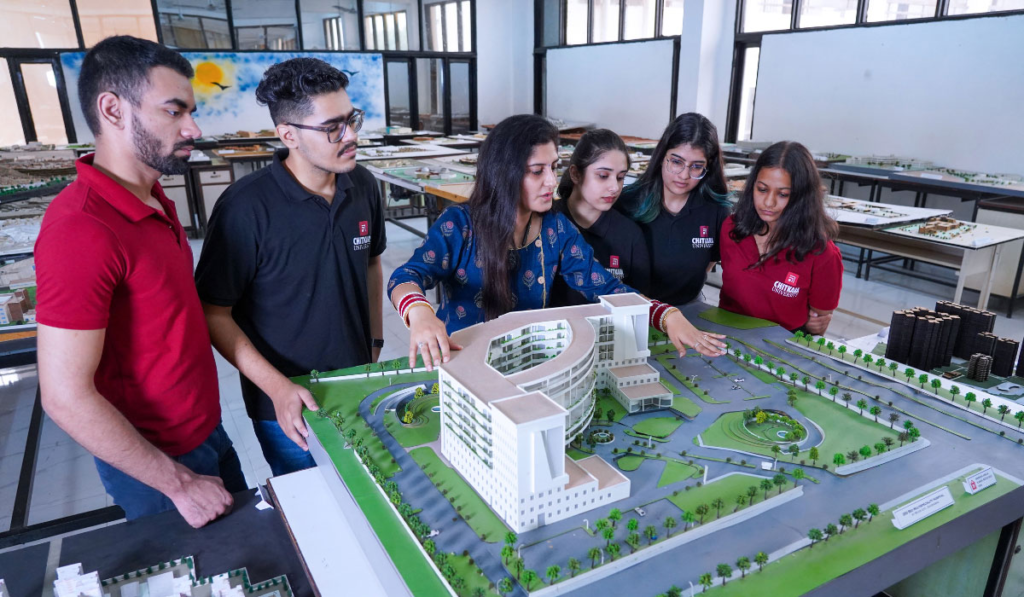
Is Architecture Hard to Study?
Architecture can certainly be demanding, but “hard” does not necessarily mean impossible.
Students often spend significant time developing designs, preparing drawings, building models, studying sites, researching context and presenting projects. Design reviews can require students to explain not only what they have created but why every important decision has been made.
At the same time, architecture can be deeply rewarding for people who enjoy creativity, problem-solving, observation and understanding how people interact with spaces.
The question should therefore not only be “How many years does architecture take?” but also “Do I enjoy the kind of thinking architecture requires?”
What Happens After Architecture School?
Graduating from architecture school is not the end of learning. In many ways, it is the beginning of understanding how architecture works in the real world.
Young professionals begin dealing more deeply with clients, consultants, contractors, approvals, budgets, construction drawings, materials, deadlines and site conditions. Architecture careers can then develop in many directions, from architectural practice and urban design to interiors, research, heritage, computational design, project management and specialised areas of the built environment.
The architecture degree provides the foundation. Professional experience gradually teaches architects how to transform that foundation into confident practice.
Is Spending 5 to 7 Years Becoming an Architect Worth It?
For someone genuinely interested in design and the built environment, the length of architectural education should be viewed in context.
Architects influence homes, workplaces, schools, hospitals, public spaces, cultural institutions and entire neighbourhoods. Their decisions affect how people move, gather, work, rest and experience a place.
That level of influence requires preparation. Architecture demands patience, curiosity and continuous learning, but it also offers something few professions can: the opportunity to see an idea move from a sketch or model into a real environment inhabited by people.
The years are not simply spent earning a qualification. They are spent developing a completely different way of observing the world.
So, Does It Take 7 Years to Be an Architect?
No, becoming an architect does not universally take seven years.
If you are studying architecture in India, the recognised undergraduate B.Arch course duration is five years, followed by the applicable Council of Architecture registration process. In the UK, the traditional route has commonly taken a minimum of seven years when study and practical experience are considered together. In the United States, the timeline depends on the degree, experience requirements, examinations and the rules of the individual licensing jurisdiction.
The best way to understand the architecture career path is therefore not to focus on one magic number.
Architecture may take five years for one stage of the journey and longer before another architect reaches independent professional practice. What matters is where you study, where you want to practise and which professional route applies to you.
So if the idea of “seven years to become an architect” has been making you reconsider architecture, do not let that number decide your future. Research the architecture qualification requirements in your country, understand the real course duration and then ask the question that matters most: Do you want to spend your career shaping the spaces in which people live their lives?