


Finishing a Bachelor of Architecture is a major milestone, but it often creates another difficult question almost immediately: what comes next? For many graduates, the decision becomes M.Arch vs Job After B.Arch. One path keeps you in an academic environment and gives you an opportunity to study architecture in greater depth. The other places you directly inside studios, offices, project teams and construction sites, where design decisions meet budgets, regulations, clients and real-world constraints.
There is no universal answer to the M.Arch vs Job After B.Arch debate. The more useful question is what you need at this stage of your career. Do you need deeper knowledge in a particular subject, or do you need professional exposure? Are you already certain about a specialisation, or are you still trying to understand what kind of architect you want to become?
For students in India, the distinction is also important from an educational perspective. The Council of Architecture describes B.Arch as a five-year undergraduate degree in architecture, while its 2022 postgraduate guidelines state that a full-time postgraduate architecture degree has a minimum duration of two academic years or four semesters.
That makes the choice far more significant than simply deciding whether to study or work. You are deciding how to invest in the next important phase of your professional development.
What Does M.Arch vs Job After B.Arch Really Mean?
At first glance, the difference seems simple. An M.Arch gives you advanced academic study, while a job after B.Arch gives you professional experience. In reality, both routes strengthen very different parts of your architectural thinking.
A Master of Architecture can help you explore a specialised subject, strengthen your research ability and build a more focused body of work. Depending on the institution, postgraduate architecture programmes may concentrate on subjects such as urban design, conservation, environmental design, housing, digital technologies or other specialised fields.
A job after B.Arch develops a different kind of understanding. Working in an architecture practice can expose you to working drawings, consultant coordination, client meetings, approvals, specifications, site conditions, deadlines and project delivery.
The M.Arch vs Job After B.Arch decision should therefore begin with your career objective rather than the assumption that one route is automatically more prestigious.

Why an M.Arch Can Be a Strong Career Move
An M.Arch makes the most sense when you already have a clear reason for pursuing advanced study.
If a particular subject genuinely interests you, postgraduate education can provide the time, mentorship and academic structure to investigate it more deeply than a general undergraduate architecture programme usually allows. Studio work, seminars, research and a thesis can help you develop a stronger intellectual position and a more specialised portfolio.
This can be valuable for graduates interested in research-led design, architectural conservation, urban issues, advanced technologies, environmental performance, policy-oriented work or academic careers. The exact benefit, however, depends on the programme, faculty, curriculum and how closely the specialisation aligns with your long-term goals.
An M.Arch can also be useful if your undergraduate portfolio does not yet reflect the kind of architecture you want to pursue professionally. A well-chosen programme can give you an opportunity to develop a clearer design direction and build work around a focused area of interest.
The important point is that an M.Arch should not become an automatic continuation of B.Arch simply because entering professional practice feels uncertain.
Also read – Architecture Thesis Topics 2026: Brilliant Ideas for Your Final-Year Project
What a Job After B.Arch Teaches That College Cannot Fully Replicate
A job after B.Arch introduces you to aspects of architecture that are difficult to reproduce completely inside an academic studio.
A concept that looks convincing on a presentation sheet becomes considerably more complex when structural systems, building services, budgets, construction methods, consultants, codes and client decisions enter the process. Professional practice teaches you how architecture survives these negotiations.
You begin to understand office workflows, drawing standards, consultant relationships, site coordination, material decisions and project timelines. You also learn how much of architectural practice depends on communication, coordination and documentation rather than design ideation alone.
Perhaps more importantly, a job helps you understand what kind of work you genuinely enjoy. A student may believe they want to specialise in one area and discover through professional experience that another type of practice is far more suited to their skills and interests.
For graduates who are still uncertain about their architecture specialisation, working first can make a later M.Arch decision considerably more informed.
Is M.Arch Necessary to Become an Architect in India?
This is one of the most important misconceptions to clear up in the M.Arch vs Job After B.Arch discussion.
An M.Arch is not mandatory simply to seek professional registration as an architect in India. Under the Architects Act, the Council of Architecture maintains the Register of Architects, while Section 37 restricts the use of the title and style of “architect” to registered architects or firms of architects, subject to the exceptions contained in the Act.
The Council of Architecture’s registration documentation specifically includes the five-year B.Arch degree among the recognised architectural qualifications on the basis of which registration may be sought.
Therefore, an M.Arch is an additional postgraduate qualification rather than a compulsory second degree required merely to enter the profession. Graduates should, of course, check and follow the current Council of Architecture registration requirements before using the professional title.
Choose M.Arch When You Know Why You Need It
One of the clearest signs that an M.Arch may be right for you is that you can explain exactly what you want to study and why.
Saying that you simply “want to learn more about architecture” is too broad. A stronger reason could be an interest in conservation, urban systems, climate-responsive architecture, computational methods or another specialised area that connects directly with a future career direction.
You should also be able to identify programmes whose faculty, studios, research culture and academic resources correspond with that interest. The value of postgraduate education comes from the relevance of the programme, not simply from adding another degree to your CV.
If you are considering M.Arch mainly because you are nervous about job applications, dissatisfied with your portfolio or reluctant to leave college, postgraduate education could postpone the career decision rather than solve it.
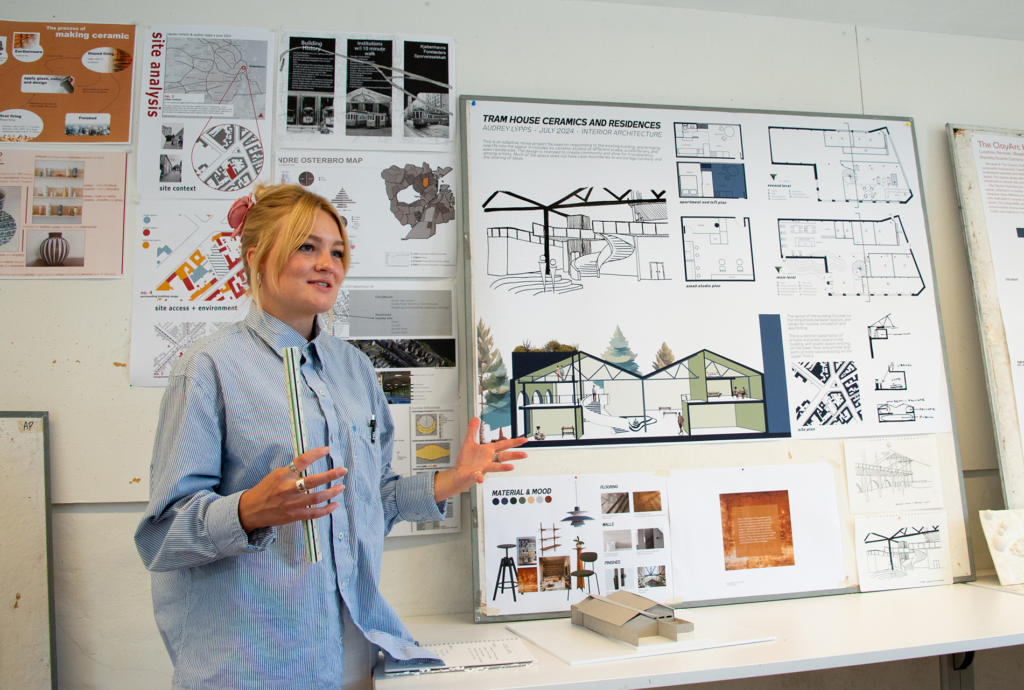
Choose a Job After B.Arch When You Need Professional Clarity
A job after B.Arch can make more sense when your largest knowledge gap is not academic theory but professional practice.
If you want to understand how projects move from concept development to construction, how consultants coordinate, how clients influence design or why drawings frequently change on site, professional experience can offer immediate value.
The type of architecture firm you join also matters. A smaller studio may allow you to participate in several stages of a project, while a large multidisciplinary practice may expose you to specialised departments, larger developments and more complex coordination.
Neither environment is automatically better. What matters is whether the job provides useful responsibility, mentorship and opportunities to understand architecture beyond isolated tasks.
A year spent understanding projects deeply can be more valuable than simply accumulating one year of employment without meaningful professional growth.
The Financial Side of M.Arch vs Job After B.Arch
The financial dimension deserves serious consideration before choosing higher studies after B.Arch.
A full-time M.Arch generally involves tuition fees, living expenses and the opportunity cost of not earning a full-time salary during the study period. For some architecture graduates, that investment is justified because the programme provides access to a valuable specialisation, research environment or professional network.
For others, working first may offer a better balance. A job allows you to earn, build practical experience and determine whether postgraduate education is truly necessary for the architecture career you want.
The question should therefore not simply be, “Can I afford an M.Arch?” A more useful question is, “What specific professional outcome am I investing in?”
Before committing to a programme, examine its curriculum, faculty, graduate work, facilities, professional connections and the kinds of roles previous graduates pursue. A vague assumption that a master’s degree will automatically produce better career opportunities is not enough.
Does M.Arch Automatically Mean a Higher Salary?
Not necessarily.
Architectural compensation can vary according to location, firm, role, project type, experience, technical ability, communication skills and the value an individual brings to a project team. A postgraduate qualification may support access to certain specialised, academic or research-oriented positions, but it does not guarantee that every M.Arch graduate will earn more than someone who spent the same period gaining strong professional experience.
The reverse is equally important. Starting an architecture job immediately after B.Arch does not guarantee faster career growth. If the position offers limited mentorship, little responsibility and repetitive production work, the experience may not strengthen your professional profile as much as expected.
When considering M.Arch vs Job After B.Arch, look at the quality of the next two years rather than simply the qualification or job title attached to them.
Your Architecture Portfolio May Matter More Than You Think
Architecture continues to be a highly portfolio-driven profession.
An M.Arch portfolio may demonstrate advanced research, experimentation, specialised thinking and deeper design development. A professional architecture portfolio may show built projects, detailing, technical documentation, competitions, site involvement or participation across multiple stages of a project.
The strongest portfolio is not necessarily the one containing the most polished renders. It is the portfolio that communicates how you think, what you understand and exactly what you contributed.
If you choose a job after B.Arch, continue documenting your professional growth wherever project confidentiality permits. If you choose M.Arch, work towards building a coherent body of projects rather than treating every studio assignment as an isolated academic exercise.
Your portfolio should gradually begin pointing towards the architecture opportunities you want next.
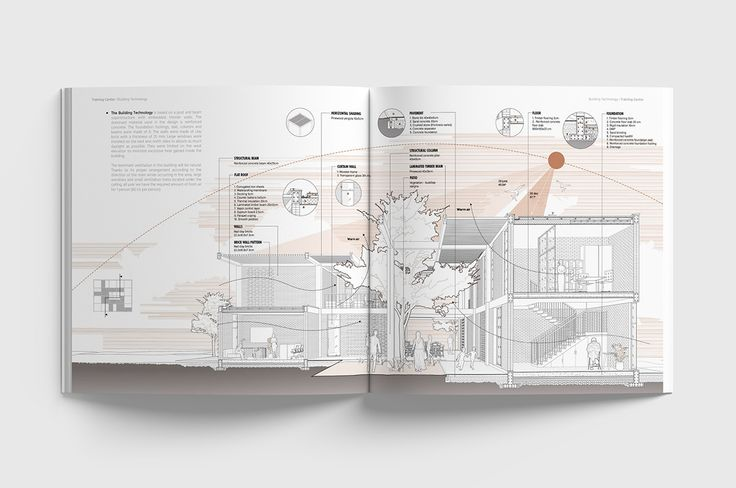
Working Before M.Arch Can Be a Powerful Third Route
The M.Arch vs Job After B.Arch decision does not have to be permanent. One of the most practical career paths can be B.Arch, followed by professional experience, followed by M.Arch.
Working before postgraduate study can completely change the questions you bring back to university. Instead of approaching research only through academic assumptions, you may enter an M.Arch programme with direct knowledge of construction constraints, approvals, consultants, materials, clients, users and project delivery.
That experience can make postgraduate architecture studies more grounded. It can also help you select an architecture specialisation with greater confidence.
There is no general rule that an M.Arch has to begin immediately after completing B.Arch. Admission conditions vary among universities, so candidates should check the latest eligibility requirements and selection criteria for every M.Arch programme they are considering.
When Going Straight Into M.Arch Can Make More Sense
There are equally valid circumstances in which continuing directly into postgraduate architecture education makes sense.
If you already have a strong interest in a particular field, have identified M.Arch programmes that directly support your goals and still have the momentum for intensive academic work, beginning postgraduate study immediately can be an efficient career path.
This can be particularly useful when the programme gives you access to research facilities, laboratories, specialist faculty or design resources that would be difficult to access independently.
Students considering an M.Arch abroad should examine the professional licensing and accreditation structure of that country separately. A postgraduate architecture degree from another jurisdiction should not automatically be assumed to operate in the same manner as an Indian M.Arch.
The key is specificity. “I want an M.Arch because it will look impressive on my CV” is weak reasoning. “I want this programme because its research, faculty and studios directly support the work I want to pursue” is a much stronger foundation for the decision.
What Employers May Value Beyond B.Arch or M.Arch
Whether you hold a B.Arch or later complete an M.Arch, architecture employers will still want evidence of what you can actually do.
A clear portfolio, strong design thinking, technical understanding, drawing quality, software proficiency, communication and professional discipline can all influence early career opportunities. Site awareness, material knowledge and the ability to coordinate effectively with other people can also make a young graduate more valuable within a project team.
That is why M.Arch vs Job After B.Arch should not become a debate about qualifications alone. A degree creates opportunities to learn, while a job creates opportunities to practise.
Neither route produces professional growth automatically. Much depends on how actively you use the environment you choose.
How to Make the Decision Without Following Everyone Else
Begin by thinking about the type of work you would like to be doing five years from now.
If that future requires deeper subject knowledge, research ability or a specialised design direction, investigate M.Arch programmes seriously. If your biggest need is exposure to real projects, construction processes, architecture offices and professional responsibility, a job after B.Arch may offer greater immediate value.
Then examine your current architecture portfolio. Does it already communicate a clear direction, or are you still exploring different interests? Consider your finances, your willingness to continue academic study and, importantly, the quality of the job or university opportunities actually available to you.
Do not make the decision merely because your classmates are taking a particular route. Architecture careers rarely follow identical timelines, and an early difference in direction does not determine who will ultimately build the stronger career.

Final Thoughts: M.Arch vs Job After B.Arch Is About What You Need Next
The real answer to M.Arch vs Job After B.Arch is not that one career path is universally better. Each path solves a different professional need.
An M.Arch can be valuable when you want focused postgraduate study, research, architecture specialisation or a stronger academic foundation in an area you genuinely care about. A job after B.Arch can be equally valuable when you need project exposure, construction understanding, professional confidence and clarity about how architecture operates outside college.
For many architecture graduates, gaining professional experience before pursuing a master’s degree can create a strong combination of practical knowledge and advanced study. For others, moving directly into M.Arch is the more coherent choice.
Your B.Arch has already given you a foundation. Your next move should depend on what that foundation still needs: deeper knowledge, deeper practice or, eventually, both.
Is M.Arch Compulsory After B.Arch?
No. An M.Arch is a postgraduate architecture qualification and is not compulsory simply because you have completed B.Arch. In India, professional registration is governed by the Architects Act and the Council of Architecture’s requirements concerning recognised qualifications and registration.
A master’s degree should therefore be pursued because it supports your career direction rather than because it is assumed to be the compulsory next stage of architectural education.
Can I Work After B.Arch and Do M.Arch Later?
Yes. Professional experience before postgraduate study can help you identify a more relevant architecture specialisation and bring practical knowledge into your M.Arch studies.
Individual universities and institutions can have different admission requirements, examinations or selection processes, so applicants should always check the latest requirements before applying.
Is M.Arch Better Than Work Experience?
They develop different strengths. An M.Arch can deepen research, design exploration and specialised knowledge, while professional experience can develop project delivery, coordination, technical understanding and familiarity with real construction processes.
Which is more useful depends on the architecture career you are trying to build rather than on one qualification being inherently superior to the other.
Will M.Arch Guarantee Better Career Opportunities?
No qualification can guarantee a particular job, salary or career outcome.
An M.Arch can create valuable opportunities when the programme is closely connected to a clear specialisation or professional goal. Portfolio quality, practical experience, technical capability, communication skills and the relevance of the programme will continue to influence what opportunities follow.