

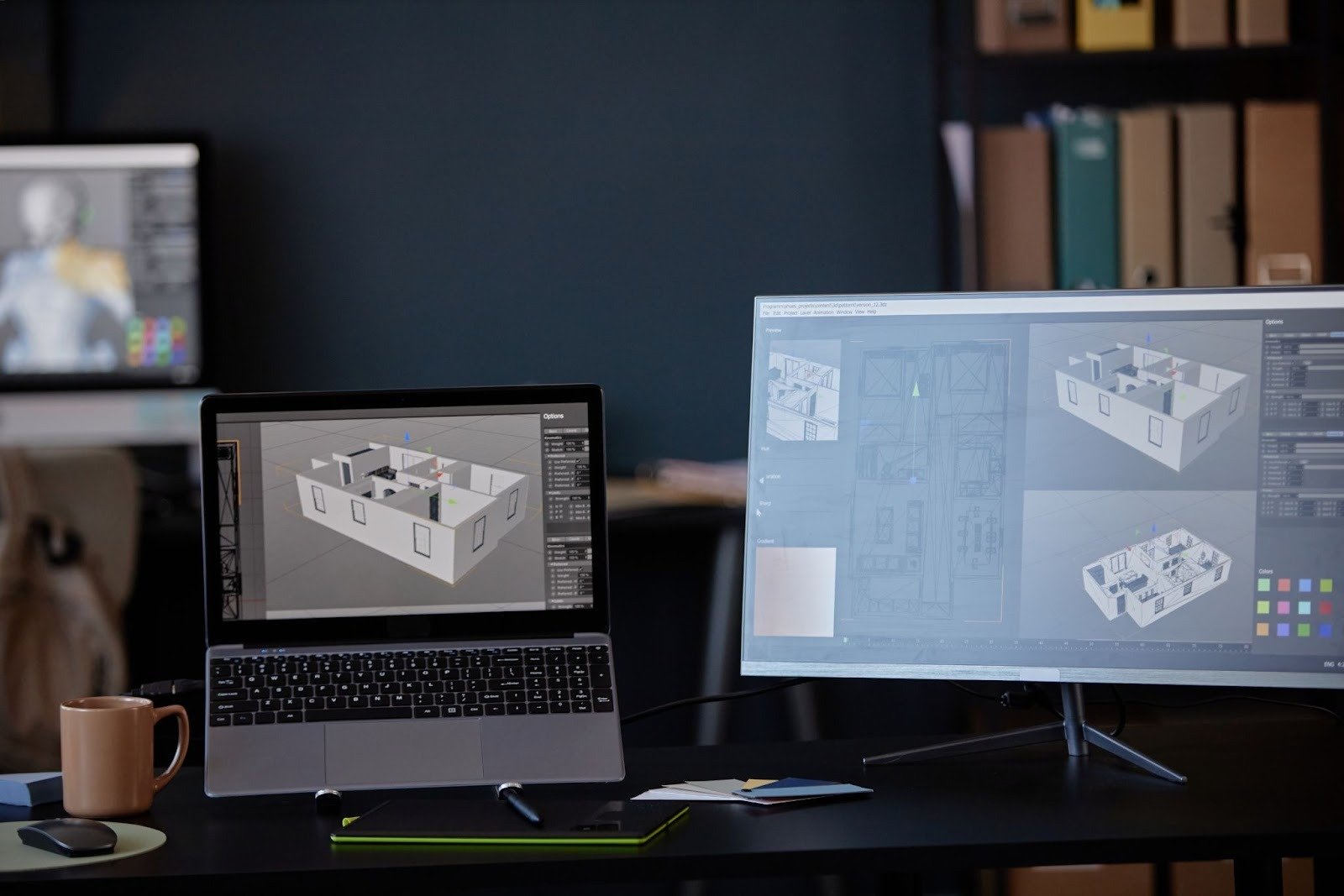
In today’s digital age, good software skills for architects are of ever-growing importance.
Proficiency in the right programs not only boosts your effectiveness but can raise your pay. Refer to the architecture software list below that every architect should master, plus how they impact your career.
Building Information Modeling (BIM) – Revit & ArchiCAD
BIM tools like Autodesk Revit are now industry-standard. Knowing Revit can significantly increase your value (many firms pay more for Revit-certified architects). It lets you create integrated 3D models, generate schedules, and collaborate with engineers. Completing a BIM course is highly recommended. Employers often note that BIM-skilled architects earn 10–20% higher salaries than those using only CAD.

CAD Drafting – AutoCAD
AutoCAD remains ubiquitous for 2D drafting. Most entry-level jobs require AutoCAD proficiency. It’s often a minimum requirement listed on job postings. Speed and accuracy in CAD mean you can produce construction drawings quickly, saving project time. Even seniors practice CAD daily. A quick refresher course in advanced CAD techniques (layer management, blocks) can set you apart.
3D Modeling & Rendering – SketchUp, 3ds Max, Lumion
Visualization skills matter. SketchUp is easy for quick massing models; 3ds Max or Blender can produce high-quality renderings. Better renders often help win projects. Architects with 3D skills can pitch higher consulting fees or land roles in boutique design firms. For example, familiarity with Lumion or V-Ray (for real-time rendering) is a hot commodity – listings often mention them. These tools also speed up client presentations.

Documentation & Estimation – MS Office & Cost Software
While not glamorous, Excel/Word are crucial. Use Excel for bill of quantities (BOQ) and basic cost estimation. Architects who can quickly prepare schedules and budgets save their firm time. This makes you valuable. Sites report that architects comfortable with BOQs and MS Project can negotiate slightly higher starting pay.

Graphic & Layout – Adobe Suite
Photoshop and InDesign help in presentation boards and portfolio creation. Learning these lets you produce polished graphics. Many freshers skip this, but firms appreciate it. Including a few well-rendered presentation images (touch-ups in Photoshop) shows professionalism.
Specialized Tools
Depending on your interest, skills like Rhino/Grasshopper (parametric design), GIS (for urban projects), or Sketching tablets (for hand sketches on screen) can also be worth mentioning. For instance, architects working on complex geometry or sustainable design often use Grasshopper; such niche skills are rare and can command premium salaries.
Integrating Skills
In interviews and on your resume, explicitly list your software proficiency. Rather than writing just “AutoCAD”, say “AutoCAD (Advanced)” or “Revit – BIM Modeling”. Back it up in your portfolio: annotate projects with “Modeled in Revit” or “Rendered in Lumion”. Each relevant software bullet in your resume can lead to higher pay brackets.
Staying Updated
Architecture technology evolves fast. Show employers you keep pace by learning new tools. For example, some firms now use AI-driven design tools or VR for client walkthroughs. Mentioning recent learning (like “Completed online course in VR architectural visualization”) signals initiative.
Software literacy is as important as design creativity. Regularly improving your digital toolkit through courses, self-study or workshops will make you more competitive and justify a higher salary. A tech-savvy architect stands out and is rewarded accordingly in India’s job market.
FAQ – Architecture Software Skills
Which software is most important?
At a minimum, AutoCAD and one 3D tool (e.g. SketchUp or Revit). For higher pay and advanced roles, proficiency in Revit (BIM) and rendering software (Lumion, V-Ray) is crucial.
How do I list software on my resume?
Under Skills, bullet: AutoCAD – 5 years (e.g. “CAD Drafting – AutoCAD (5 years of experience)”). Use similar phrasing for others. If you have certificates (like Autodesk Certified), note them.
Will learning software really increase salary?
Yes. Job ads and salary surveys show architects with BIM or advanced 3D skills often get ~10% higher starting salaries. These tools increase your productivity, which firms value financially.