


Architecture is often imagined as a profession built around sketches, concepts, models and beautifully rendered presentations. But between a drawing on a screen and an actual building standing on site lies an enormous amount of coordination, decision-making and problem-solving.
That is where a Site Architect Career becomes important. A site architect helps translate architectural drawings and design intent into built reality while coordinating with contractors, engineers, consultants, vendors and project teams.
For young architects who enjoy being closer to construction rather than spending their entire working day inside a design studio, a Site Architect Career can offer one of the most practical ways to understand how architecture actually gets built.
From reading construction drawings to resolving unexpected problems on site, the role can develop technical knowledge that is difficult to gain through drawings alone.
What Is a Site Architect Career?
A Site Architect Career focuses primarily on the execution stage of an architectural project. While design architects may spend more time developing concepts, plans and presentations, site architects spend a significant part of their time ensuring that those designs are implemented correctly.
Their responsibility is not simply to “supervise construction.” They often act as an important communication link between the architectural team and the people executing the project.
A Site Architect Career can involve checking drawings, monitoring workmanship, coordinating structural and MEP requirements, reviewing materials, clarifying details and reporting site progress.
In many firms, the role also overlaps with project architecture and construction coordination. This means responsibilities can vary considerably depending on whether someone is working with an architecture studio, developer, contractor, PMC or large multidisciplinary consultancy.

Why a Site Architect Career Is Different From a Studio Architecture Job
A studio architect may spend much of the day working with AutoCAD, Revit, SketchUp, BIM models, presentations, drawings and design development.
A Site Architect Career puts those drawings into a completely different context. On site, a detail that looked straightforward on paper may suddenly collide with a structural beam, plumbing line, electrical service or construction limitation.
This is where practical architectural judgement becomes essential.
Site architects constantly compare drawings with actual conditions. They identify discrepancies, communicate changes and work with project teams to find solutions without losing the original design intent.
That makes a Site Architect Career particularly useful for architects who want to develop a deeper understanding of materials, workmanship, detailing and construction systems.
Also read – Will Architects Be in Demand in 10 Years? The Powerful Truth About Architecture Careers
What Does a Site Architect Actually Do?
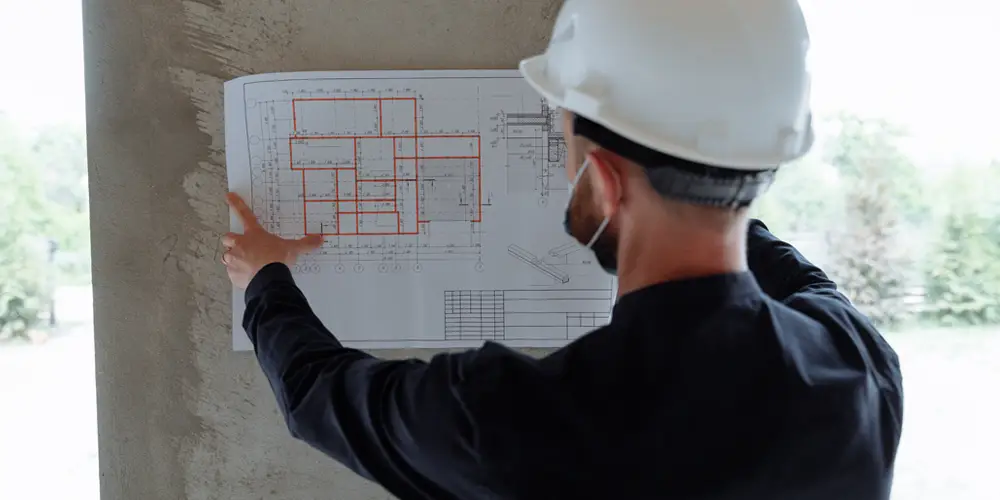
The responsibilities within a Site Architect Career usually begin with understanding architectural drawings in detail. Plans, sections, elevations, working drawings, Good for Construction drawings and technical details become everyday working documents rather than theoretical representations.
Site architects may conduct inspections to check whether construction follows approved drawings. They may verify dimensions, layouts, materials, finishes and important architectural details while coordinating with contractors whenever inconsistencies appear.
Current architectural job descriptions in India frequently include responsibilities such as preparing or reviewing construction drawings, coordinating architectural information with structural and MEP consultants, reviewing materials and shop drawings, resolving execution issues and checking that work follows the approved design intent.
A Site Architect Career therefore combines architecture, communication and construction management rather than concentrating on only one area.
The Site Architect Becomes the Design Team’s Eyes on the Ground
One of the most important aspects of a Site Architect Career is protecting design intent during construction.
Consider something as simple as a feature wall. The drawing may specify its dimensions, material and location, but the actual site execution could involve electrical points, concealed services, edge conditions, structural constraints and material tolerances.
Someone has to notice these issues before incorrect work becomes permanent.
The site architect observes what is happening, compares it with drawings and communicates necessary clarifications. A small mistake identified early may take minutes to correct. The same mistake discovered after finishing work could become expensive.
This ability to notice issues before they become larger problems is one of the most valuable skills developed through a Site Architect Career.
Site Architect Career Skills That Matter Beyond Software
Knowing AutoCAD, Revit or SketchUp certainly helps, but software alone does not make someone effective on site.
A strong Site Architect Career requires the ability to read architectural drawings quickly and accurately. You should understand dimensions, levels, sections, construction details, material specifications and how different drawings relate to each other.
Construction knowledge becomes equally important. Architects working on site gradually learn how masonry, waterproofing, flooring, ceilings, façades, joinery, glazing, services and finishing systems actually come together.
Many current Indian architecture openings also ask for knowledge of building materials, construction techniques, working drawings, GFC drawings, site coordination, consultant coordination and project execution alongside software proficiency.
The strongest Site Architect Career is therefore built on both digital competence and practical construction understanding.

Communication May Be Your Most Important Site Skill
Architecture school can teach you how to design. A construction site teaches you how important clear communication really is.
In a Site Architect Career, you may communicate with contractors, structural engineers, MEP consultants, vendors, carpenters, fabricators, clients, project managers and senior architects in the same week.
A technically correct solution becomes useless if it cannot be communicated clearly enough for everyone involved to understand and execute it.
Site architects therefore need to ask precise questions, document decisions properly and explain drawings without unnecessary confusion.
Over time, this communication experience can become one of the greatest long-term benefits of a Site Architect Career.
Problem-Solving Is Where Site Architects Really Learn
Construction rarely happens exactly as imagined during the design stage.
A column might be slightly different from the assumed location. A service line may interfere with a ceiling. A specified material may become unavailable. A detail may prove difficult to execute within the available tolerance.
A Site Architect Career places architects directly inside these situations.
The goal is usually not to abandon the design every time a difficulty occurs. Instead, the architect must understand the problem, coordinate with relevant specialists and find a solution that works technically while preserving the architectural idea wherever possible.
This repeated problem-solving develops something that cannot easily be learned from software tutorials: architectural judgement.
Who Is a Site Architect Career Best Suited For?
A Site Architect Career can suit architects who are curious about how buildings are actually assembled.
If you enjoy understanding why a detail works, how materials meet, how services are coordinated or why something failed during execution, site architecture can be extremely educational.
It can also work well for people who enjoy variety. Instead of spending eight hours continuously drafting, your day may move between drawings, inspections, coordination meetings, measurements and problem-solving.
However, a Site Architect Career may feel demanding if you strongly prefer controlled studio environments. Construction sites can involve noise, dust, travel, changing schedules and situations that require immediate decisions.
Understanding this difference early can help architecture graduates choose the type of professional environment that suits them.
Education Required for a Site Architect Career in India
For someone intending to work professionally as an architect in India, the conventional route is a recognised architectural qualification such as the five-year Bachelor of Architecture programme followed by registration with the Council of Architecture.
The Council of Architecture regulates architectural education and maintains the register of architects in India under the Architects Act, 1972. COA states that registration entitles an eligible person to use the title and style of “Architect.”
For students planning a Site Architect Career, architecture school provides the foundation, but site exposure during internships can be particularly valuable.
Visiting active projects, observing construction stages and understanding working drawings can make the transition from college to professional practice much easier.

Site Architect Career Salary in India in 2026
Salary is one of the most searched questions around a Site Architect Career, but there is no single salary figure that accurately represents the whole Indian market.
Companies use titles such as Site Architect, Junior Architect, Project Architect, Architect, Senior Architect and Design-and-Execution Architect differently. Responsibilities and compensation can therefore overlap considerably.
Indeed reported an average architect salary in India of approximately ₹24,901 per month based on its salary data, updated on July 28, 2026. It also showed a broad reported range extending from roughly ₹11,800 to ₹52,546 per month depending on factors such as experience, location and employer.
A live Site Architect opening indexed in 2026 advertised approximately ₹18,000 to ₹25,000 per month and included consultant coordination, drawing preparation, site visits and checking construction against drawings.
These numbers should be treated as market indicators rather than fixed salary standards.
What Can Freshers Expect From a Site Architect Career Salary?
At the beginning of a Site Architect Career, salaries are often modest because fresh graduates are still building technical confidence and learning professional construction processes.
Recent junior architect salary submissions on Glassdoor show examples around ₹24,000 to ₹40,000 per month across Indian cities, although individual salaries vary substantially by employer and location.
Someone working with a small architecture studio on residential sites may earn differently from someone joining a developer, corporate consultancy or large commercial project.
Instead of looking only at the first salary, early-career architects should also examine the quality of exposure they will receive. Experience with construction documentation, site execution, consultant coordination and technically complex projects can strengthen future earning potential.
A Site Architect Career often becomes financially stronger as responsibility grows.
Site Architect Career Salary After Five Years
After several years of professional experience, architects who can independently coordinate projects become much more valuable.
Current 2026 senior architecture listings involving project execution and site coordination show salaries around ₹35,000 to ₹50,000 per month in some firms, while other roles advertise approximately ₹50,000 to ₹80,000 per month. Some experienced positions are advertised around ₹8–14 lakh annually.
These examples illustrate how wide the market can be.
A Site Architect Career with five years of repetitive site supervision may not progress at the same rate as five years involving drawing coordination, client interaction, team management, technical detailing and independent project responsibility.
The quality of your experience matters almost as much as the number of years printed on your CV.
What Determines Your Salary in a Site Architect Career?
Experience naturally matters, but project type can significantly influence compensation.
Architects working on complex hospitals, airports, hotels, institutional projects, high-rise developments, luxury residences or large commercial projects may gain exposure to coordination challenges that are valued by larger practices and developers.
Technical ability matters as well. Architects who understand working drawings, BIM coordination, construction sequencing, specifications and detailing can often handle more responsibility than those whose experience is limited to visual monitoring.
Location, employer size, project budget, communication skills and the ability to manage teams also influence Site Architect Career salary growth.
Ultimately, architects are usually paid more when they can take responsibility rather than simply complete assigned tasks.

AutoCAD, Revit and BIM in a Modern Site Architect Career
Digital tools have changed the way construction information reaches the site.
AutoCAD remains widely used for working drawings, while Revit and BIM workflows are increasingly important on larger and more coordinated projects.
A modern Site Architect Career may require architects to navigate digital models, review coordinated drawings, understand revisions and identify conflicts between architecture and building services.
You do not necessarily need to become the BIM manager, but being comfortable with BIM-based coordination can make your Site Architect Career more future-ready.
The valuable skill is not simply knowing which button to click. It is understanding what the information in the model means for actual construction.
Site Architect Career Growth Can Lead in Several Directions
Starting on site does not mean you need to remain a Site Architect forever.
A Site Architect Career can develop into roles such as Project Architect, Senior Architect, Project Manager, Design Manager, Construction Manager, Technical Architect, BIM Coordinator or Design-and-Execution Lead.
Architects who develop strong client relationships and commercial knowledge may eventually move into leadership positions or establish their own practices.
Others discover that technical architecture is their strongest area and specialise in detailing, façade design, construction documentation or project delivery.
This flexibility makes a Site Architect Career useful even for architects who are uncertain about their final specialisation.
Can a Site Architect Move Back Into Design?
Yes. Site experience and design experience are not opposing career paths.
In fact, architects who understand construction often become stronger designers because they are more aware of how ideas will actually be executed.
A Site Architect Career can teach you realistic dimensions, material behaviour, sequencing, tolerances and contractor capabilities.
When architects later return to design-focused roles, this knowledge can influence the way they detail buildings and make decisions.
Design begins to become less about producing a beautiful image and more about understanding how architecture survives the journey from concept to construction.
The Challenges of a Site Architect Career
A Site Architect Career can be rewarding, but it is not necessarily comfortable.
Project deadlines can create pressure. Site conditions can be physically demanding. Travel may be required, and some projects can involve long working hours depending on construction schedules.
There is also responsibility. An overlooked discrepancy or poorly communicated instruction can affect cost, quality or progress.
However, these challenges are also why site experience can accelerate professional maturity.
Young architects quickly learn that architecture is collaborative. Buildings are produced through hundreds of decisions involving many people, and a successful Site Architect Career requires the ability to work within that complexity.
How to Grow Faster in a Site Architect Career
Career growth begins when you stop treating site visits as inspection exercises and start treating them as opportunities to understand construction.
Ask why a particular waterproofing detail is being used. Understand why the contractor prefers one sequence over another. Study shop drawings. Compare working drawings with completed work. Observe how services pass through architectural spaces.
A Site Architect Career becomes far more valuable when you understand the reason behind each decision instead of simply checking whether work is complete.
Documentation also matters. Learning how to record site observations, issue clear instructions, track revisions and communicate unresolved questions professionally can quickly distinguish you from someone who only visits the project and reports progress.
Building a Strong Portfolio for a Site Architect Career
A site architect portfolio should demonstrate more than attractive final photographs.
Employers hiring for execution-oriented roles often want evidence that you understand working drawings, details, materials and project coordination.
Show projects where you contributed meaningfully to execution. Explain the scale of the project, your responsibilities and the technical problems you helped solve.
A strong Site Architect Career portfolio communicates ownership.
Instead of writing that you “worked on a residential project,” explain whether you coordinated consultants, developed construction details, reviewed shop drawings, handled site clarifications or monitored finishing work.
Specific responsibilities make your experience more credible.
Is a Site Architect Career a Good Choice in India?
A Site Architect Career can be a strong option for architects who want to understand buildings beyond drawings and renders.
India continues to develop housing, commercial spaces, hospitality projects, infrastructure, workplaces, healthcare facilities and institutional developments. Every project ultimately requires professionals who can connect design information with construction.
The Council of Architecture reported nearly 1.49 lakh year-wise architect registrations between 2011 and September 2026, illustrating the considerable size of India’s architectural profession.
Competition certainly exists, but practical expertise can become a differentiator.
Architects who combine design sensitivity with construction knowledge, digital skills and effective coordination can position themselves for broader project responsibilities.
Site Architect Career vs Project Architect Career
These titles are sometimes used interchangeably, but the emphasis may differ.
A Site Architect Career generally places greater attention on construction execution and daily or frequent site coordination. A Project Architect may have broader responsibility across design development, consultants, clients, documentation and project delivery.
As site architects become more experienced, the difference can narrow.
Someone who begins by checking execution may eventually manage drawings, schedules, consultants, clients and teams. At that point, the career naturally starts moving towards project architecture or project management.
That progression is one of the most common ways a Site Architect Career can expand.
Will AI Replace the Site Architect Career?
AI can make drawing production, information retrieval, visualisation and documentation more efficient, but construction sites remain highly physical and contextual environments.
Someone still needs to understand whether the drawing matches the built condition, whether different trades are conflicting and whether a proposed solution maintains the design intent.
AI may increasingly help architects analyse information and coordinate projects, but site judgement depends on understanding materials, people, constraints and real-world conditions.
The stronger approach is therefore not to compete against technology but to build a Site Architect Career that combines digital tools with practical knowledge.
Architects who understand both BIM models and construction reality may become even more valuable as project delivery becomes increasingly technology-driven.